
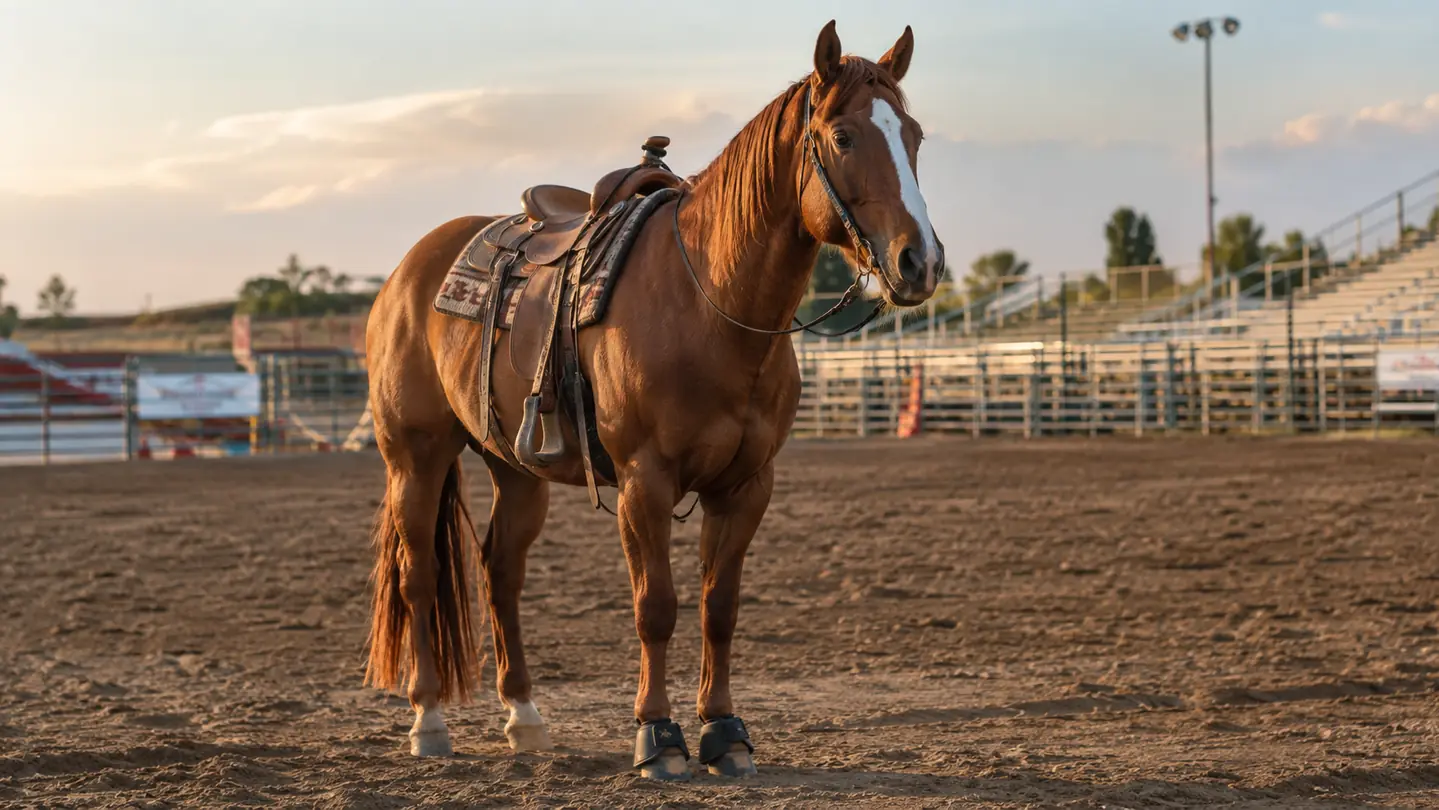
I'll be straight with you. When I ordered a set of Shires ARMA bell boots for Biscuit last spring, I did not expect to still be using them in the fall. Bell boots take a beating at our place. Between the gravel by the barn, the sand in the practice pen, and the miles of two-track between here and the jackpots we haul to, most rubber boots are lucky to make it a full season. The Shires ARMA boots have done better than that, and they've also taught me a few things nobody puts in the product description.
This is the honest review I wish I'd read before I bought them. Not a catalog page. Not a five-star rave from someone who rode once in a round pen. Just what happens to these boots on a real horse, at real speed, over real months. If you're trying to decide whether the Shires ARMA is worth your money, here's what I can tell you from the ground.
The Quick Verdict
A tough, well-made bell boot that fits most horses right out of the package. The sizing runs a little small, the closure takes some getting used to, and the price is higher than the cheap pull-ons. But for a horse that overreaches hard, the protection is worth it.
Amazon Check Today's Price →The bell boot that survived a full season of hauling and roping
If you're tired of replacing cheap rubber boots every few months, the Shires ARMA is worth a serious look. It's not the cheapest option, but it's built to last.
Amazon Check Today's Price on Amazon →How I've Used Them
Biscuit is a 14-year-old sorrel quarter horse gelding, and he still runs barrels at local jackpots. He's not a big overreacher, but he's not careful either. When he gets tired at the end of a long weekend, he'll clip a heel now and then. That's exactly the situation bell boots are for: protecting the bulbs of the heel and the coronet band from the front shoe of the opposite foot.
I've used the Shires ARMA boots on Biscuit for arena work, for hauling to three different jackpots, and for a couple of ranch rodeos where he stood tied to the trailer for hours. They've been through mud, sand, gravel, and one very wet spring. They've been yanked off in a hurry when a storm blew in, thrown in the back of the truck, and left in a tack box for two weeks at a time. That's the test that matters. The first real test was a jackpot over near Stephenville in late April. We loaded at six in the morning, the ground was still soft from rain, and Biscuit ran a clean pattern. When I pulled the boots off that afternoon, the right front had a good scuff on the toe where he'd clipped it on the second barrel, but the heel bulb underneath was clean. That was the moment I stopped worrying about whether the shell would hold.
The Shires ARMA is a neoprene bell boot with a tough outer shell and a hook-and-loop closure. The neoprene is thick enough to absorb a hard knock, and the shell takes the scuffing. The closure wraps around the leg and fastens with a strap, which is different from the simple pull-on rubber boots most people start with.
Sizing: Read This Before You Order
Here's the thing nobody tells you. The Shires ARMA sizing runs small. I ordered a medium for Biscuit based on the size chart, and it was snug across the pastern. Not unusable, but snug. Biscuit wears a size 0 front shoe, and the medium was still a firm fit over the back of his leg. If your horse is between sizes, or if you plan to use these over a splint boot or a polo wrap, size up. I've heard the same from three other women at the jackpots who run these boots.
The good news is that the neoprene gives a little once it warms up. A boot that feels tight when you first put it on will loosen after ten minutes of work. But a boot that's too small from the start will rub the back of the pastern, and a rub on a working horse is a problem you don't want. Measure your horse's hoof and pastern before you order, and when in doubt, go up a size. I measured Biscuit's front hoof at the widest point and his pastern circumference before ordering, and the medium still fit tight. The chart's measurements are honest, but the boot runs on the narrow side of the range. A horse with a heavy cannon bone or a big heel bulb should think hard about the next size up.
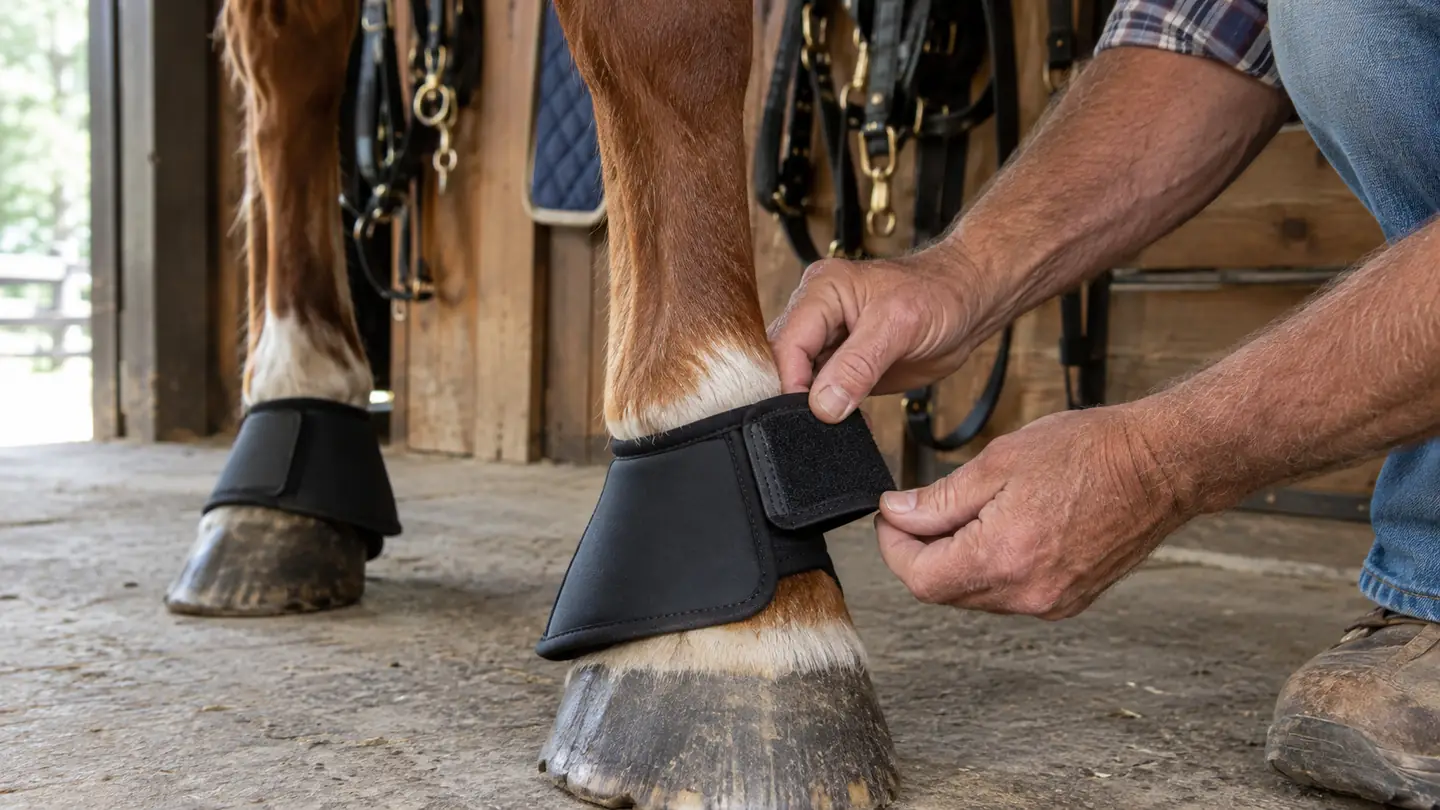
The other sizing note is about the opening. The Shires ARMA has a fairly narrow opening at the top, which is part of why it stays put. But it also means you have to get the boot over the hoof and up the leg with a little more care. If your horse is impatient about having his feet handled, this is a boot you'll want to put on before he's had enough of the whole process. The first morning I used them, I was in a hurry and tried to force the boot over his hoof without loosening the strap enough. It hung up on the heel bulb and took a full minute to work free. Once I learned to open the strap all the way and pull the boot on at a slight angle, it stopped being a fight.
Fit and the Closure System
The hook-and-loop closure on the Shires ARMA is the feature that makes it different from a pull-on boot. You can get a custom fit around the leg, which means less slop and less chance of the boot spinning around. On a horse that overreaches hard, that's a real advantage. A boot that twists is a boot that doesn't protect. The first time I rode in them, I kept checking to see if they'd shifted. They hadn't. After a pattern and a long cooldown walk, the boots were right where I'd put them.
But the closure has a learning curve. The strap is stiff when the boot is new, and it takes two hands to get it snug. The first few times, I felt like I needed three hands: one to hold the boot, one to pull the strap, and one to press the hook-and-loop together. It gets easier as the strap breaks in, but it never becomes a one-handed job. I timed myself one morning: four minutes for the first boot, closer to two for the second. Now that the strap has softened, I can do both in about a minute and a half. That's still slower than pulling on a rubber boot, but it's not a big deal once you're used to it.
The other thing to know is that the hook-and-loop will pick up hay, shavings, and arena sand. That's true of every hook-and-loop closure on a horse, and the Shires ARMA is no exception. I keep a stiff brush in the tack room and give the straps a quick once-over before I put them on. It takes ten seconds and it keeps the closure working. I also tried putting these over polo wraps one wet weekend, thinking the extra padding would be a good idea. It wasn't. The wrap bunched behind the strap, and the whole thing felt bulky. These boots work best against a bare leg or over a thin, smooth splint boot.
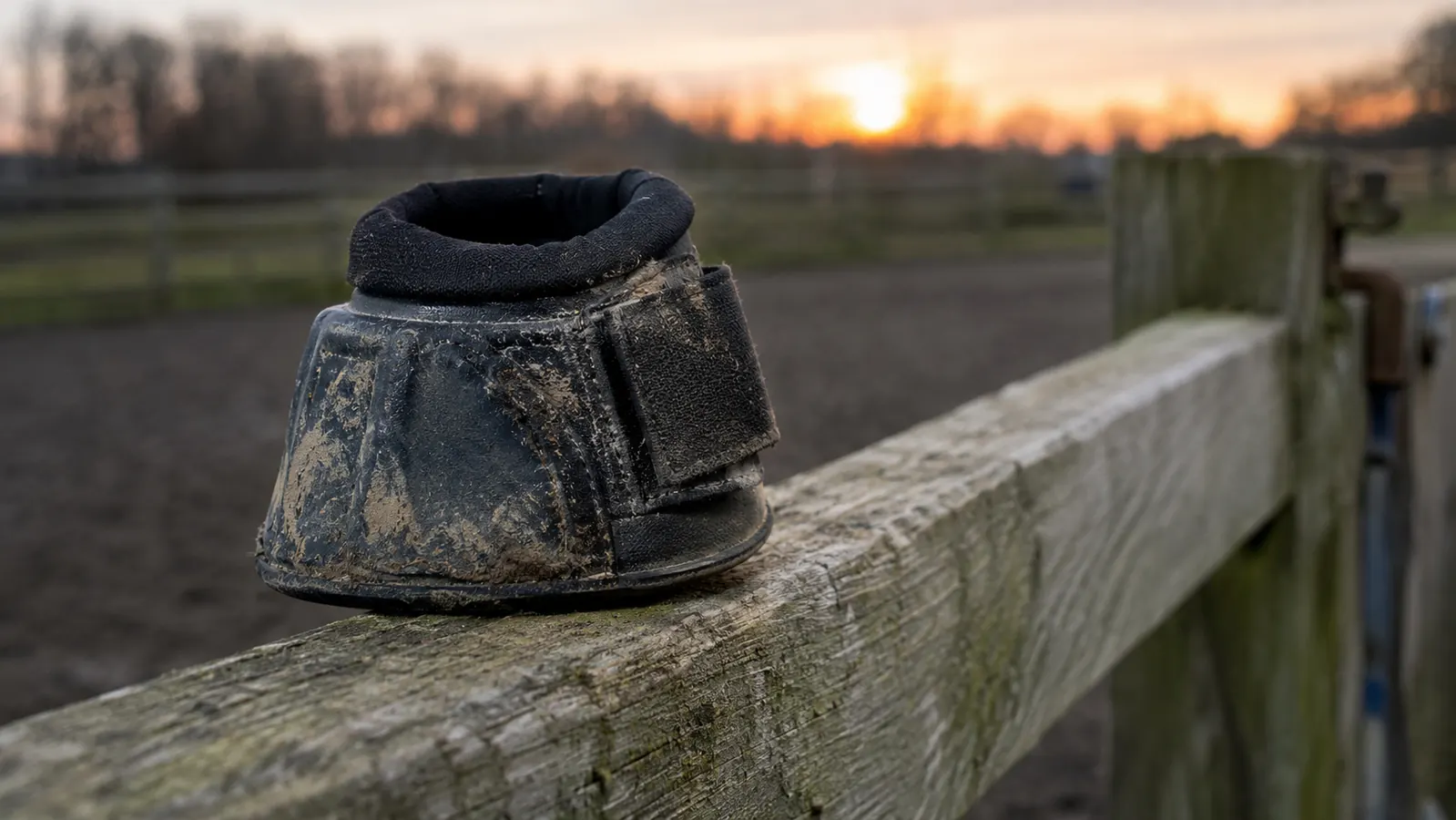
After a full season of gravel, sand, mud and jackpot runs, the Shires ARMA boots are still holding their shape. That's more than I can say for any cheap rubber pull-on I've owned.
Durability: What Actually Holds Up
The durability is where the Shires ARMA earns its keep. The outer shell is tough. After months of use, the boots show scuffs and a few nicks, but there are no tears, no cracks, and no chunks missing. The stitching around the top edge is still intact, which surprised me, because that's usually the first thing to go on a bell boot. I bought them in April and this is now October. That's a full season of hauling to jackpots, practice twice a week, and one ranch rodeo where Biscuit stood tied to the trailer for four hours while a storm blew through. The right front boot took a solid hit from a steel gate post when I was loading at dusk, and it has a scuff to show for it, but the shell didn't tear.
The neoprene has held up too. It's still thick and springy, not flattened and stiff like the foam in cheaper boots. The inside is still smooth, which matters because a rough inside is what causes rubs. I've washed these boots with a hose and a mild soap, and they come up looking almost new. The pair sat in the back of my truck for a week in August, in and out of the sun, and the neoprene didn't warp or get sticky. The same week would have turned a cheap rubber boot into a floppy mess.
The hook-and-loop closure is the one part I watch. After a season of use, it still holds firmly, but I can tell it's not as aggressive as it was when new. That's normal wear, and it's replaceable in the sense that the strap is accessible. I'd rather have a closure I can clean and maintain than a one-piece rubber boot that's done when it's done.
What I Liked
- Tough outer shell that shrugs off gravel, sand and gate posts
- Thick neoprene absorbs hard overreaches without flattening
- Hook-and-loop closure gives a snug, twist-free fit
- Stitching and materials hold up through a full season
- Easy to clean with a hose and mild soap
Where It Falls Short
- Sizing runs small, so read the measurements and consider sizing up
- Closure takes two hands and is stiff when new
- Narrow opening makes them slower to put on than pull-ons
- Neoprene runs warm on hot days
- Costs more than basic rubber pull-on boots
What Nobody Tells You
Here's the honest part. The Shires ARMA boots are not the easiest boots to put on. The narrow opening and the stiff strap mean you'll spend a little more time at the barn. If you're used to pull-on rubber boots that go on in two seconds, the first week with these will feel like a hassle. The first time I put them on, I was convinced I'd ordered the wrong size. They went on, but they were not the slip-on-and-go experience I was used to.
They also run warm. The neoprene is thick, which is great for protection but not great for a hot Texas afternoon. On a 95-degree day, Biscuit's legs are warmer when I pull the boots off than they are with a lighter boot. I don't leave them on for hours in the heat. They go on for the ride, they come off after. At a July jackpot, I left them on during a long wait between runs and noticed him stomping a little in the trailer. Once I pulled them off and hosed his legs, he settled. Since then, they go on right before the run and come off as soon as we're done.
And they are not cheap. The Shires ARMA costs more than a basic set of rubber pull-ons. You're paying for the neoprene, the shell, and the closure. Whether that's worth it depends on your horse. If you have a horse that overreaches hard enough to bruise the heel or knock the coronet band, the protection is worth every penny. If your horse never touches a heel, a cheaper boot will do. One more thing: the boots come in a set of two, so you get both front legs covered, and the hook-and-loop means you can take them off without pulling them over the hoof, which is easier on a tired horse at the end of a long day.
How They Compare to What I Used Before
Before the Shires ARMA, I ran the standard rubber pull-on bell boots. They were cheap, they were easy, and they wore out fast. The rubber would crack at the top, the bell would get thin where it hit the ground, and after a few months they'd be floppy. I went through two sets a season. The last set I had before these didn't even make it to the first jackpot of the year. I pulled them out of the tack box in March and the rubber had cracked where it folded during the winter. That's when I started looking for something with more structure.
The Shires ARMA boots are a different animal. They're stiffer, more substantial, and they stay where you put them. The tradeoff is the learning curve and the price. For me, the tradeoff is worth it, because I'm not replacing them every few months. But I understand why someone with a careful horse and a tight budget would stick with the cheap ones. If your horse is careful, the cheap boots are probably fine. Mine is not careful, and I'd rather spend a little more once than keep buying the same disappointment.
Who This Is For
The Shires ARMA bell boot is for the horse that needs real protection. If you barrel race, rope, or work cattle, and your horse has ever come up sore from an overreach, this is the boot to try. It's also for the rider who is tired of replacing cheap boots. The Shires ARMA is built to last, and it shows. I'd also point someone toward these if they ride on gravel or haul a lot. The shell handles the ground better than any rubber boot I've used.
Who Should Skip It
Skip the Shires ARMA if your horse is careful with his feet and never touches a heel. Skip it if you need a boot that goes on in two seconds flat, because the closure takes longer. And skip it if you're on a tight budget and your horse doesn't need this level of protection. A basic rubber pull-on will do the job for a horse that doesn't overreach. And if your horse hates having his feet handled, the narrow opening will test your patience. These are not the boots for that fight.
Still on the fence? That's fair.
The Shires ARMA isn't the cheapest bell boot, and it's not the easiest to put on. But if your horse needs real protection from overreaching, it's the boot I'd buy again. See the current price and check the sizing chart before you order.
Amazon Check Today's Price on Amazon →