
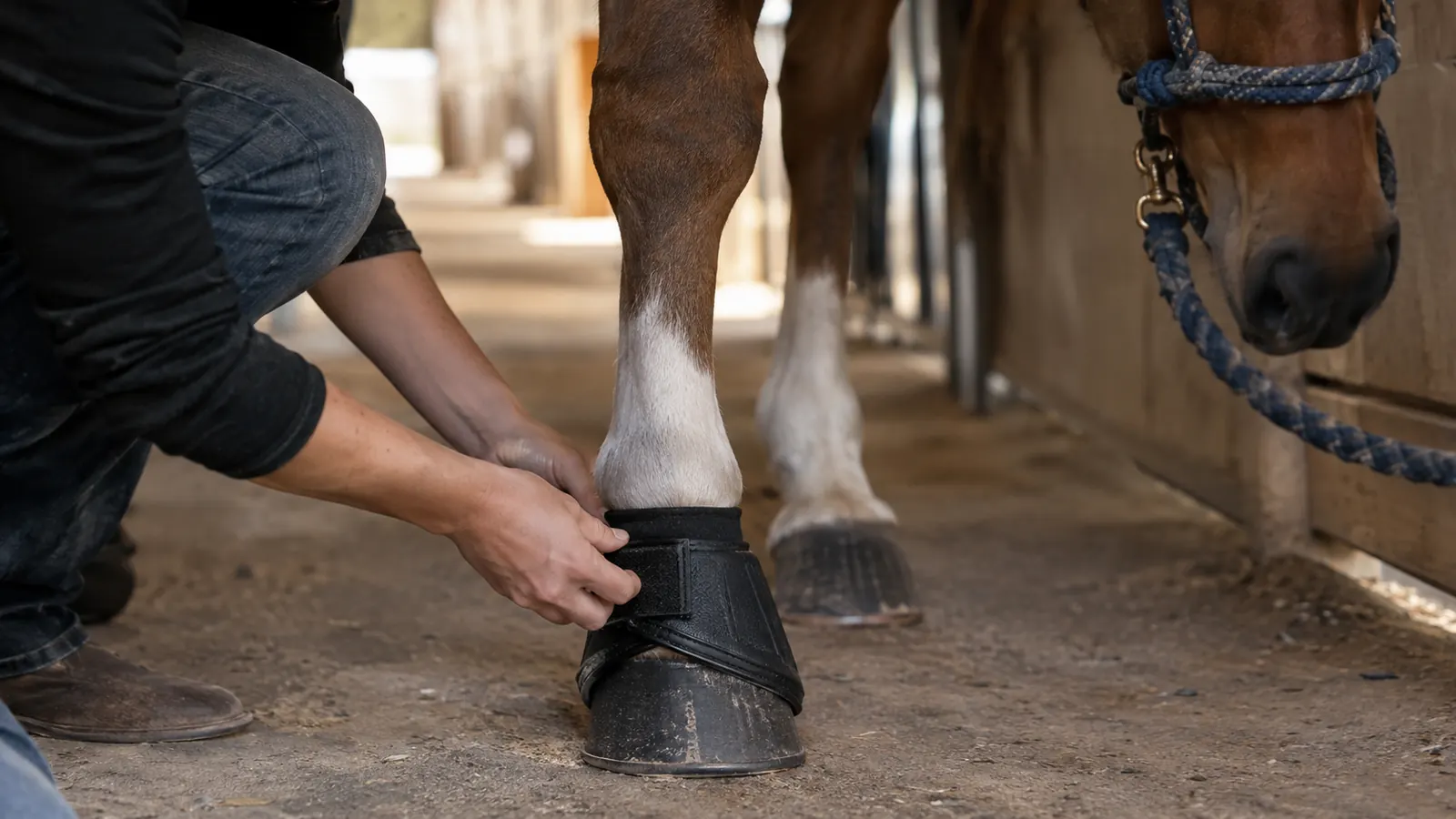
If you have ever pulled a boot out of a mud hole at the trailer, you already know why this comparison matters. I keep two kinds of bell boots in my tack room at all times: a pair of Shires ARMA over reach boots and a pair of plain pull-on rubber ones. They are not the same tool, no matter how similar they look in a catalog photo. One of them is built for speed and staying put. The other is built for mucking through the kind of weekend where the ground turns to soup and you just need something cheap to get through it. Last spring at a jackpot in Stephenville, I watched a woman lose a rubber boot in the warmup pen and spend ten minutes fishing it out of the mud before her run. She made her run with one bare heel. That image has stayed with me.
I will give you the short answer first, then the long answer. For barrel racing on Biscuit, my 14-year-old sorrel gelding, I reach for Shires every time. For pasture turns and muddy warmups when I am just trying to keep feet clean, the rubber pull-ons are fine. If you only buy one pair, buy the Shires. That is the honest version. I have been around rodeos my whole life, and I have learned that the gear you trust at speed is not always the gear you grab for daily chores.
| Shires ARMA Bell Boots | Pull-On Rubber Bell Boots | |
|---|---|---|
| Staying on | Double straps hold firm through a run, even when Biscuit breaks hard at the second barrel | Fine in a straight line; can work loose in deep footing and get lost in the pen |
| Fit | Strap closure lets you dial it in for a high hoof or a low one | One size stretches; fits most horses but has no adjustment once it is on |
| Durability | Reinforced body holds up to a full season of weekend hauling | Rubber gets chewed by other horses and can crack in the sun after a couple of seasons |
| Mud and water | Sheds mud fine, but you have to rinse the straps so grit does not wear them | Nothing to rinse off; just hose it and hang it on a nail |
| Price | Costs more up front | Cheap enough to keep a spare pair in the trailer at all times |
| Best for | Barrel runs, roping runs, hauling to jackpots, horses that overreach hard | Turnout, pasture, muddy warmups, first-time buyers, loaner pairs |
Where Shires Wins
The main reason I switched Biscuit to Shires ARMA boots is the same reason most barrel racers I know have a pair in the trailer: they stay on. Biscuit has a big, reaching stride and he clips his front heels on the back feet more than I would like, especially when the ground gets deep at the second barrel. With pull-on rubber boots, I spent half the season tightening them between runs. With Shires, I strap them on, check them once, and they are still right where I put them when we pull up at the trailer after the run. I remember a Saturday in April when the arena had been watered down and then raked, leaving a surface that was soft on top and slick underneath. Biscuit hit the second barrel hard, and I felt him grab for footing. When I pulled him up, both boots were still sitting square. That was the day I stopped carrying the rubber ones as my primary pair.
The strap closure is the difference. The Shires ARMA boot wraps around the pastern and closes with a strap, so you can set the fit to the horse in front of you. Biscuit wears a larger size and stands a little high behind, and the adjustable fit means I can run them higher or lower depending on the ground. The rubber pull-on has one job and it does it, but it does not adjust. You get the stretch, you pull it on, and you hope it lands in the right spot. On a horse with a fine pastern, the rubber boot can slide down and let the heel slip out. On a horse with a thick ankle, it can pinch at the back. The strap boot just sits where you put it.
I remember the first time I ran Biscuit in the Shires boots at a jackpot in early March. The ground had been harrowed that morning, so it was loose on top and hard underneath, the kind of footing that makes a horse grab for traction. He broke hard at the second barrel and I felt him clip, the way you always feel it through the reins. When I pulled him up at the trailer, both boots were still sitting exactly where I strapped them. That was the moment I stopped carrying the rubber ones as my main pair. I have also noticed that the Shires boots do not spin on the hoof the way the rubber ones can. The strap holds the boot in a fixed position, so the wear pattern stays even and the boot does not work its way loose over the course of a run.
The Shires boots have also held up better than I expected over a full season of weekend hauling. I put them on Biscuit for every run from March through October, which means they have been strapped and unstrapped more times than I can count, hosed off after muddy warmups, and left in the trailer through a hundred-degree Texas summer. The reinforced body still holds its shape. The straps still close clean. I have replaced the rubber pull-ons twice in that same stretch, once because a pasture mate chewed the top edge and once because the sun had cracked the rubber. The Shires pair has not needed a single repair. They look used, but they still do the job.
One thing I tell people who are new to bell boots is to check the fit with a finger between the boot and the pastern. With the Shires, I can get that fit right every time. With the rubber pull-on, I have to take what the stretch gives me. That is the practical difference you will feel the first time you strap a pair on. It is the difference between a boot that is part of your setup and a boot that is just along for the ride.
I have pulled a rubber bell boot out of more mud holes than I can count. I have never once had to dig a Shires boot out of the pen.
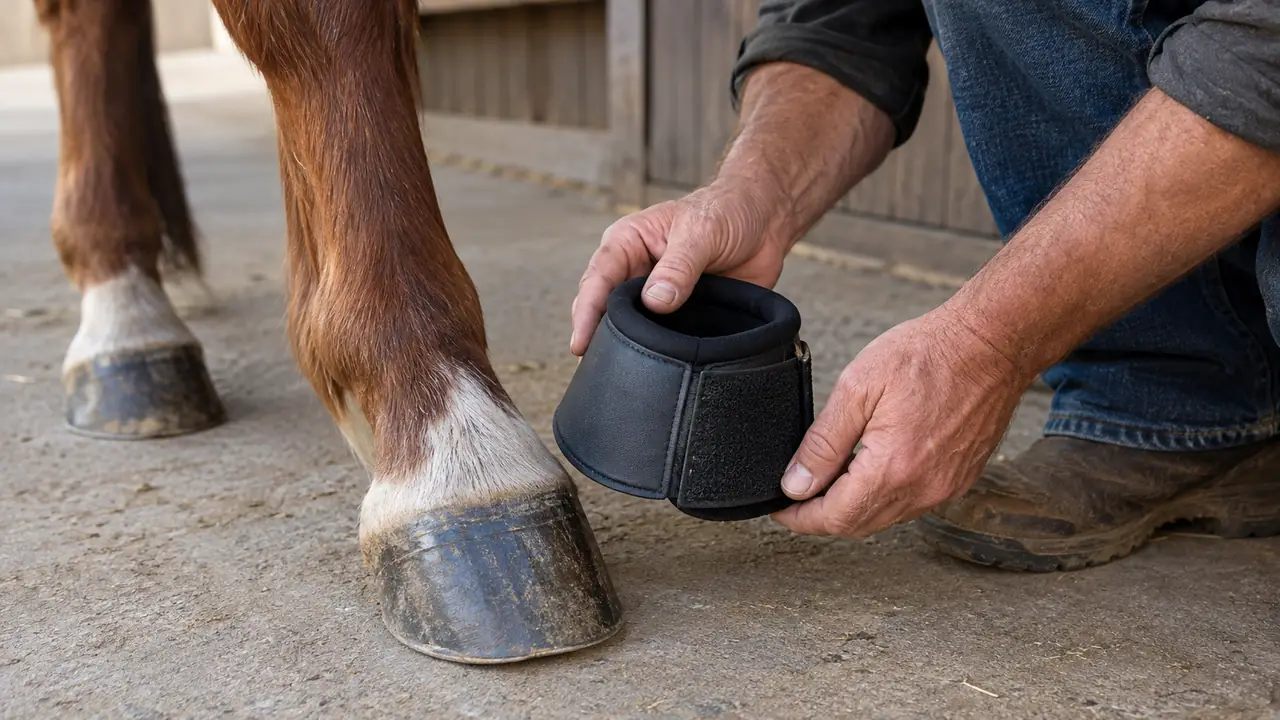
Where the Rubber Pull-On Wins
I am not going to tell you the rubber pull-on is a bad boot, because it is not. It is one of the most useful things you can keep in a trailer. It costs a fraction of what the Shires costs, which matters when you need four of them for a weekend and you know at least one is going to end up in a mud puddle. I keep a pair behind the seat of my pickup for the other two horses when we are just hauling to a roping and I need something on their feet for the trailer ride. The rubber boot does not owe me anything. If it gets lost, I am out a few dollars, not a good night's sleep.
The rubber boot also wins on pure simplicity. There is no strap to check, no buckle to come loose, nothing to rinse out after a muddy day. You hose it off, hang it on a nail in the tack room, and it is ready for next weekend. If you are the kind of person who buys one pair of boots and wants them to last three years of light use, the rubber pull-on is a perfectly honest choice. I just would not run a barrel pattern in them. The rubber is soft enough to give when a horse overreaches, which is good for protection, but that same softness means it can roll or twist when the footing is deep and the horse is really moving.
The other place the rubber boot earns its keep is the trailer ride itself. When I load the other two horses for a roping, I do not want them wearing my good Shires boots for a two-hour haul down I-20. They get the rubber pull-ons, which keep them from stepping on themselves in the trailer and do not cost me anything if one gets scuffed on the divider. I have also loaned the rubber pair to a neighbor whose gelding was tying up in the trailer. I would not loan out my Shires boots, because I know exactly how Biscuit's fit needs to be set. The rubber boot fits almost any horse well enough for a short haul, and that makes it the pair I reach for when I need something in a hurry.
One more honest note on the rubber boots: they are easier to find in the dark. The Shires boots sit low and close to the ground, and I have had to run my hand along the stall floor more than once to find one. The rubber pair shows up better when I am loading at 5:30 in the morning. That is a small thing, but small things add up on a hauling weekend. I also like that I can hose the rubber boots off and hang them wet without worrying about the straps. The Shires straps need to dry properly so the grit does not wear them, and that takes a little more thought when I am tired at the end of a long day.
The rubber boot is also the pair I grab when I am working on the ground. If I am lunging a horse in the round pen or leading one through a muddy gate, I do not need the heavy-duty protection of the Shires. I need something that keeps the heel covered and does not make me think. The rubber pull-on does exactly that. It is the pair I keep in the truck for the days when the plan changes halfway through the morning.
The bell boot I trust when the timer is running
Shires ARMA boots stay on through the hardest turns, shrug off a season of hauling, and give you a fit you can adjust in seconds. If your horse overreaches at speed, this is the pair I would buy before the next jackpot.
Amazon Check Today's Price on Amazon →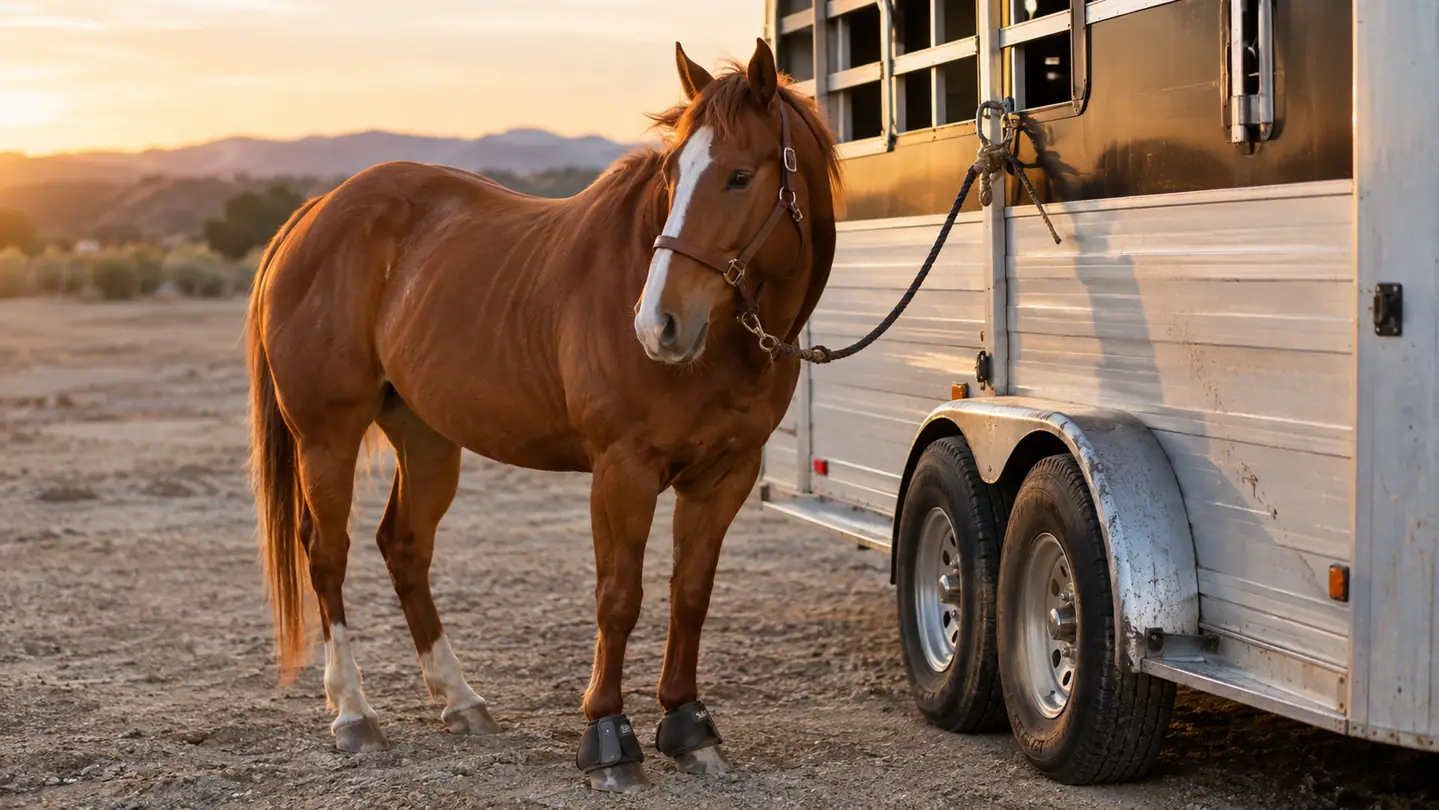
Who Should Buy Which
Buy the Shires ARMA boots if your horse overreaches at speed, if you compete on a schedule, or if you are tired of losing boots in the arena. Buy them if you want a boot you can adjust to fit a specific horse, because the strap closure is worth the extra money when the difference between a boot staying on and a boot spinning is a few seconds of adjustment at the trailer. If you are hauling to jackpots every weekend and your horse is hard on equipment, the Shires pair will pay for itself in the first season, just in the time you save not digging boots out of the dirt.
Buy the pull-on rubber boots if you mostly need turnout protection, if you are on a tight budget, or if you want a spare pair you never worry about losing. Buy them if your horse is easy on boots and does not overreach much. And buy them for the other two horses in my pasture, because not every horse needs the same gear. The Shires is the better boot. The rubber pull-on is the better value for the horse that does not need the better boot. I own both, and I will keep owning both. The question is not which one is best in a catalog. The question is which one belongs on your horse for the job you are doing that day.
Get the boots that stay on through the run
Shires ARMA bell boots are the pair I strap on Biscuit before every run. If you are tired of digging boots out of the dirt, give them a look. Check the current price on Amazon and see what fits your horse.
Amazon Check Today's Price on Amazon →