
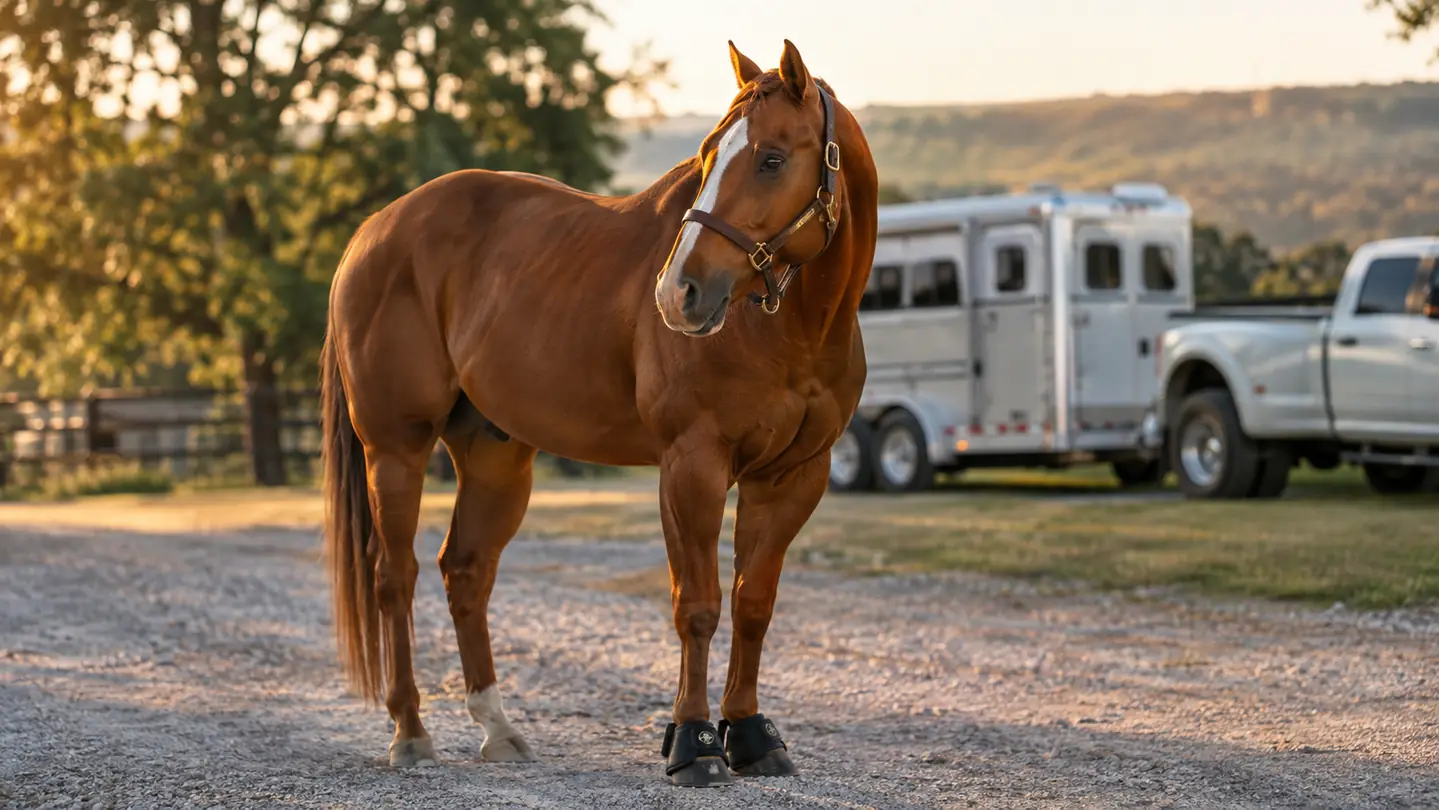
I have hauled Biscuit to more jackpots than I can count over the last year, and for most of that time he has worn the Shires ARMA over reach bell boots on his front feet. He is a 14-year-old sorrel quarter horse gelding, still quick enough to place at local shows, and he has a way of overreaching when he really digs in. Before I found these, I went through a stretch of bruised heels and lost shoes that had me checking his feet after every single run.
The Shires ARMA bell boots have been on his front legs for months of hauling, saddling, running, cooling out, and standing in the trailer on the drive home. They have also spent plenty of time in the pasture, because I do not always remember to pull them off before I turn him out. That is the kind of use that separates a boot that works from one that just looks good in the catalog.
The Quick Verdict
Tough, easy to put on, and they stay put through a run and a long trailer ride. The Shires ARMA bell boots are the pair I reach for first, and the only real knock is that the hook and loop closure can pick up hay and shavings if you turn out in them.
Amazon Check Today's Price →The bell boots that survived a full season of hauling
After months of jackpots, practice pens, and pasture turnout, the Shires ARMA over reach boots are still the pair on Biscuit's front feet. If you are tired of boots that spin, slip, or come off in the trailer, these are worth a look.
Amazon Check Today's Price on Amazon →How I've Used It
Biscuit runs barrels at local jackpots, which means a typical weekend looks like this: load him in the two-horse bumper-pull behind my three-quarter-ton pickup, drive an hour or two, saddle up, warm him up, run a pattern, cool him out, and haul him home. The bell boots go on before we load, because that is when he is most likely to clip a heel with a hind foot, and they stay on until we are back in the barn.
One Saturday in early October stands out. We loaded at 5:30 in the morning for a jackpot over in Granbury, and Biscuit was antsy before the sun came up. I put the Shires ARMA boots on him in the barn aisle while he fidgeted, and they went on clean without me having to fight the closure. He stood in the trailer for the better part of an hour, then warmed up in a pen that was slick from overnight rain. He clipped himself twice in warmup, the way he does when the footing grabs, and both times the boot took the hit. I checked his heels after the run and there was not a mark on them.
Since then they have been through a muddy practice pen in April, a dusty outdoor arena in July when the ground was like concrete, and a pasture that turned to slop after a three-day soaker in May. Each time I have taken them off, hosed the mud off, and left them to dry on the fence rail, and the closure has kept working. They have also been on Biscuit during the worst of the Texas summer, the kind of heat and humidity that makes everything feel like it is melting.
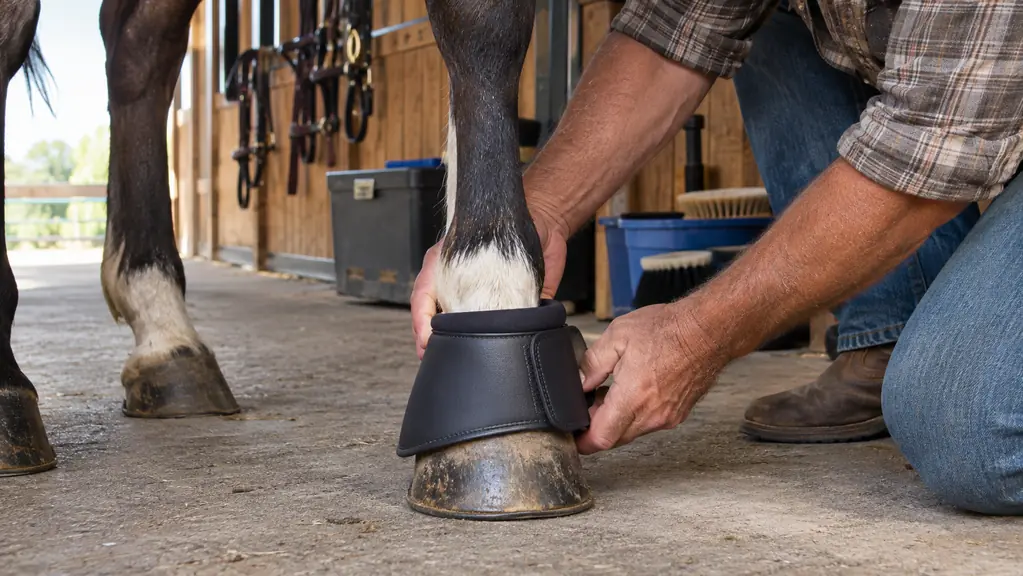
The fit is simple. Each boot has a wide hook and loop closure that wraps around the pastern, and the bell part sits down over the hoof. I can put all four on in about two minutes, which matters when you are trying to get loaded before the sun comes up. They do not have a ton of stretch, so you want to get the sizing right, but once they are on, they stay where you put them.
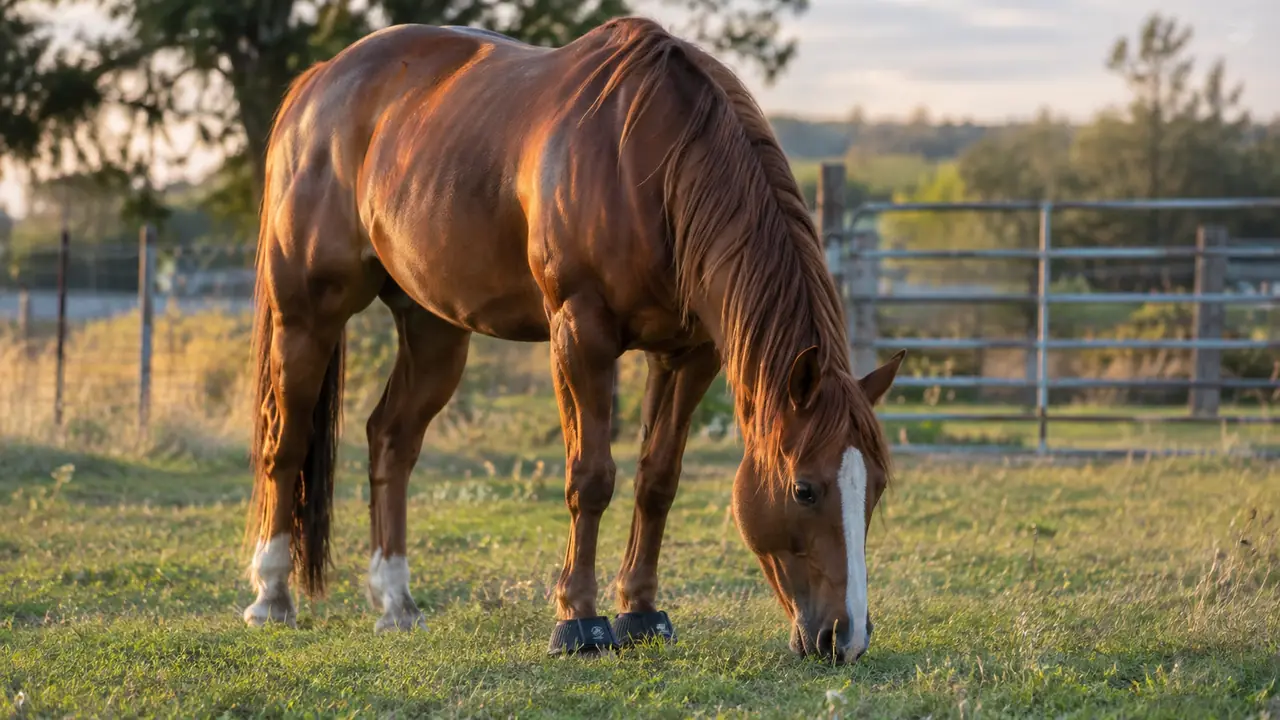
I will also admit these boots have spent more time in the pasture than I planned. There have been evenings when Biscuit came in from a run and the boots stayed on while he rolled in his pen. Rolling is the real test. A boot that does not survive a good roll is not going to survive a trailer ride. The Shires ARMA boots have come through every roll with the closure still fastened.
What the Shires ARMA Bell Boots Are Made Of
The Shires ARMA line is built around a tough outer shell with a softer lining inside. The outer material is what takes the abuse from a hind hoof that comes up and clips the back of a front leg. It is stiff enough to take a hit, but it is not so rigid that it rubs or leaves a mark on the pastern.
The outer shell is thicker than most bell boots I have handled. When I press on it, it has a firmness that says it is there to take a hit, but it flexes where it needs to so the boot can wrap the leg without standing stiff. The stitching around the top edge is double-stitched, and after months of use I have not seen a loose thread or a place where the layers have started to separate.
The inside is lined with a synthetic fleece that is soft against the leg. That matters more than most people think, because a bell boot that rubs a raw spot on the back of the pastern is worse than no boot at all. I have seen cheap rubber boots do exactly that, especially when they trap dirt and grit against the skin.
The fleece runs the full height of the boot, not just a strip at the top. That matters because the back of a front pastern takes a lot of rubbing when a horse overreaches, and a boot with lining only at the top will still chafe lower down. The lining has also stayed put, which is more than I can say for some lined boots I have owned.
The closure is a wide strip of hook and loop that wraps around and fastens securely. It is not a buckle, which is fine by me. Buckles can come loose, catch on things, or dig into the leg. The hook and loop on the Shires ARMA boots holds tight through a run, and I have never had one come unfastened on its own.
For sizing, I measured around Biscuit's pastern with a soft tape and went by the size chart. He has average legs for a quarter horse of his build, and the size I ordered fits snug without pinching. If you are between sizes, I would go up, because the closure can take up some slack but the boot cannot stretch much.
How They Held Up Over Months of Use
The honest answer is that they have held up better than I expected. After months of weekend hauling and regular practice, the outer shell shows some scuffs and a few scrapes from where Biscuit has clipped himself, but there are no tears, no cracks, and no pieces missing. The hook and loop still grabs firmly, and the fleece lining is still intact.
I put these on Biscuit back in March, before the spring jackpot season got going. By Memorial Day weekend they had been through maybe a dozen shows and twice that many practice sessions. That weekend we ran at an outdoor jackpot where the ground was hard and uneven, and Biscuit overreached harder than I have seen him do in a while. When I pulled the boots off that night, the one on his right front had a fresh scrape across the shell. I figured that was the beginning of the end for it. It is still on the same boot, and the scrape has not turned into a tear.
The one thing I have to watch is the hook and loop picking up hay and shavings. If Biscuit wears them in the pasture or stands in a deep-bedded stall, the closure collects bits of bedding. It is easy to pick out with a fingernail or a stiff brush, but it is a small chore I did not have with a solid rubber pull-on boot.
The soles have held up too. That is the part that drags the ground and takes the most abuse, and on a lot of boots it is the first thing to go. After months of use, the soles on the Shires ARMA boots are worn smooth in places but there are no holes and no separation where the sole meets the shell. I have had rubber boots split right along that seam.
They have also stayed on through the worst of it. I have had bell boots spin around on a horse's leg, and I have had them come off entirely in the trailer. The Shires ARMA boots have never done either. The wide closure and the shape of the bell keep them oriented the right way, and the fleece lining gives them enough grip that they do not slide down.
After a full season of hauling, the Shires ARMA boots have no tears, no cracks, and no missing pieces. That is more than I can say for any rubber pull-on boot I have owned.
How They Compare to Rubber Pull-On Bell Boots
I have used plenty of rubber pull-on bell boots over the years, and they have their place. They are cheap, they are simple, and they are easy to clean. But they also have a habit of stretching out, spinning around, and holding water against the leg. The Shires ARMA boots are a different animal.
I remember the exact day I gave up on rubber pull-ons for good. It was a spring jackpot, and the rubber boot on Biscuit's right front had spun around somewhere between the trailer and the warmup pen. By the time I noticed, the bell was sitting sideways and the edge of the boot was rubbing the inside of his leg. He came up sore the next day, and I spent a week babying that heel. A boot that spins is worse than no boot, because you do not know it has moved until it has already done the damage.
The Shires ARMA boots are more like a boot that you fasten, which means you can get a consistent fit every time. They do not stretch out the way rubber does, and they do not trap sweat and water the same way. The tradeoff is that the hook and loop closure needs a little more care, and the boots are not quite as quick to hose off and hang up.
The closure also lets me adjust the fit depending on the day. If we are just schooling at home, I can fasten them a little looser. If we are hauling and running, I snug them down. Rubber pull-ons are one size and one fit, and when they stretch, they are done. These have not stretched, and I do not expect them to.
For my money, the Shires ARMA boots are the better choice for a horse that actually works. If you are hauling to jackpots and running a pattern, you want a boot that stays put and takes a hit. That is what these do. The rubber pull-on boots are fine for turnout or for a horse that does not overreach much, but they are not in the same league for real work.
Who This Is For
The Shires ARMA bell boots are for anyone who is tired of replacing bell boots every few months. If you haul to rodeos, run barrels, rope, or just ride a horse that overreaches, these are worth the money. They are also a good fit for people who want a boot that stays on through a trailer ride and a full day at the grounds.
They are especially good for horses that are hard on their front heels. If you have a horse that clips itself when it gets tired or when it really digs in, the Shires ARMA boots give you a layer of protection that stays where you put it. I would also recommend them to anyone who has tried rubber pull-on boots and been frustrated by how quickly they stretch out.
Who Should Skip It
If you only need a bell boot for occasional turnout and your horse does not overreach, you can probably get away with a cheaper rubber pull-on boot. The Shires ARMA boots are not the cheapest option, and the hook and loop closure is more to fuss with than a simple pull-on.
I would also skip them if you are the kind of person who wants to be able to hose a boot off and hang it up without thinking about it. The hook and loop closure needs to be picked clean of hay and shavings every so often, and the fleece lining takes a little longer to dry than a solid rubber boot. That is a small thing, but it is worth knowing before you buy.
What I Liked
- Tough outer shell that takes repeated hits without tearing
- Wide hook and loop closure that stays fastened through a run
- Soft fleece lining that does not rub the pastern
- They stay put in the trailer and in the pasture
- Easy to put on, even in a hurry before daylight
Where It Falls Short
- Hook and loop closure picks up hay and shavings
- Not as quick to clean as a solid rubber pull-on boot
- Sizing has to be right, since they do not stretch much
A set of bell boots that will still be on your horse next season
The Shires ARMA over reach boots have earned their spot in my tack room. If you are ready to stop replacing bell boots every few months, check the current price on Amazon and see if they fit your horse's needs.
Amazon Check Today's Price on Amazon →