
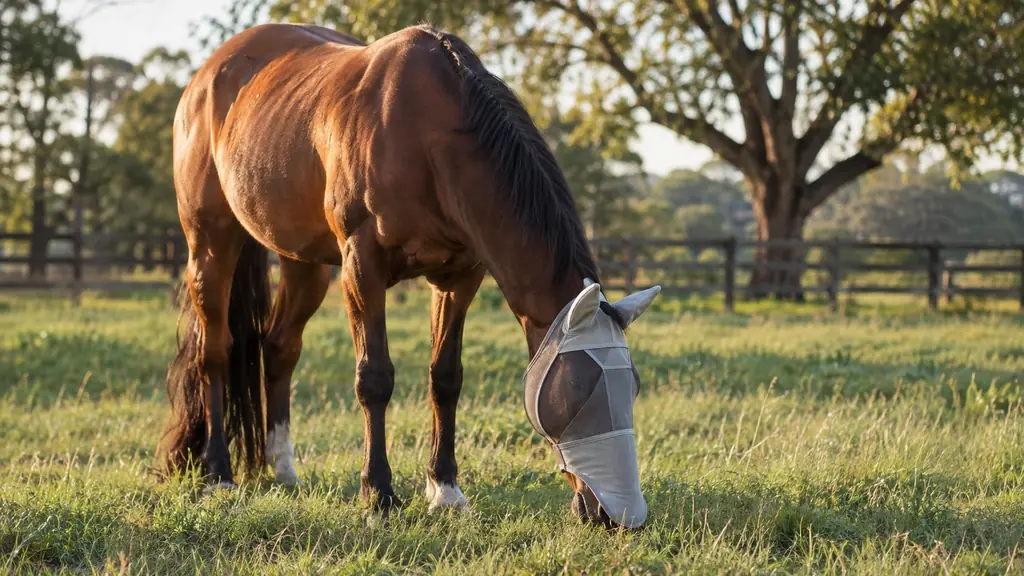
Fly season in north Texas starts around the first warm week of April and stays until the first real cold snap in October. That is six months of stomping, head flicking, and face rubbing, and it is worse for a horse that works on weekends. My main horse, Biscuit, is a 14-year-old sorrel quarter horse gelding I still run barrels on at local jackpots, and he has never handled flies well. He rubs his cheeks on the fence posts until they are bare, he throws his head in the trailer, and he will stand in the middle of the pasture shaking his head like he is trying to shake off the whole summer. By June he looked rough every year until I got serious about fly protection.
I have tried most of what the feed store carries. Sprays work until the first sweat. Wipes work until the horse rolls. The cheap mesh masks stay on until a horse learns to pop the velcro, and once they learn that trick, you will be walking the fence line looking for a mask in the tall grass. The Cashel Crusader fly mask with the long nose and ears is the one that broke the cycle for us. Biscuit wore it every day from April through October, it came along on every haul, and it is still in one piece going into this season.
The Quick Verdict
The padded ears make it the best fly mask I have used on a horse that spooks at noise, and the long nose protects the whole face. It held up through a full season of daily wear and weekend hauling. The velcro is the first thing to wear out, so plan on that.
Amazon Check Today's Price →Give your horse a quieter fly season
The Cashel Crusader with long nose and ears is the mask I reach for when the flies move in. Check today's price on Amazon to see if it fits your budget.
Amazon Check Today's Price on Amazon →How I've Used It
I bought the Crusader in late March, before the flies got bad, so Biscuit could get used to it in the pasture before he had to wear it at a jackpot. The first time I put it on him, he stood there for a long moment with his ears flicking under the quilted covers, then he went back to eating. That was the whole introduction. He has never tried to get it off since, and this is a horse that used to rub a fly mask off on the first fence post he could find. I started him with short stretches at first, an hour or two in the morning, then a full day, then a weekend haul. That slow introduction is probably why he never fought it.
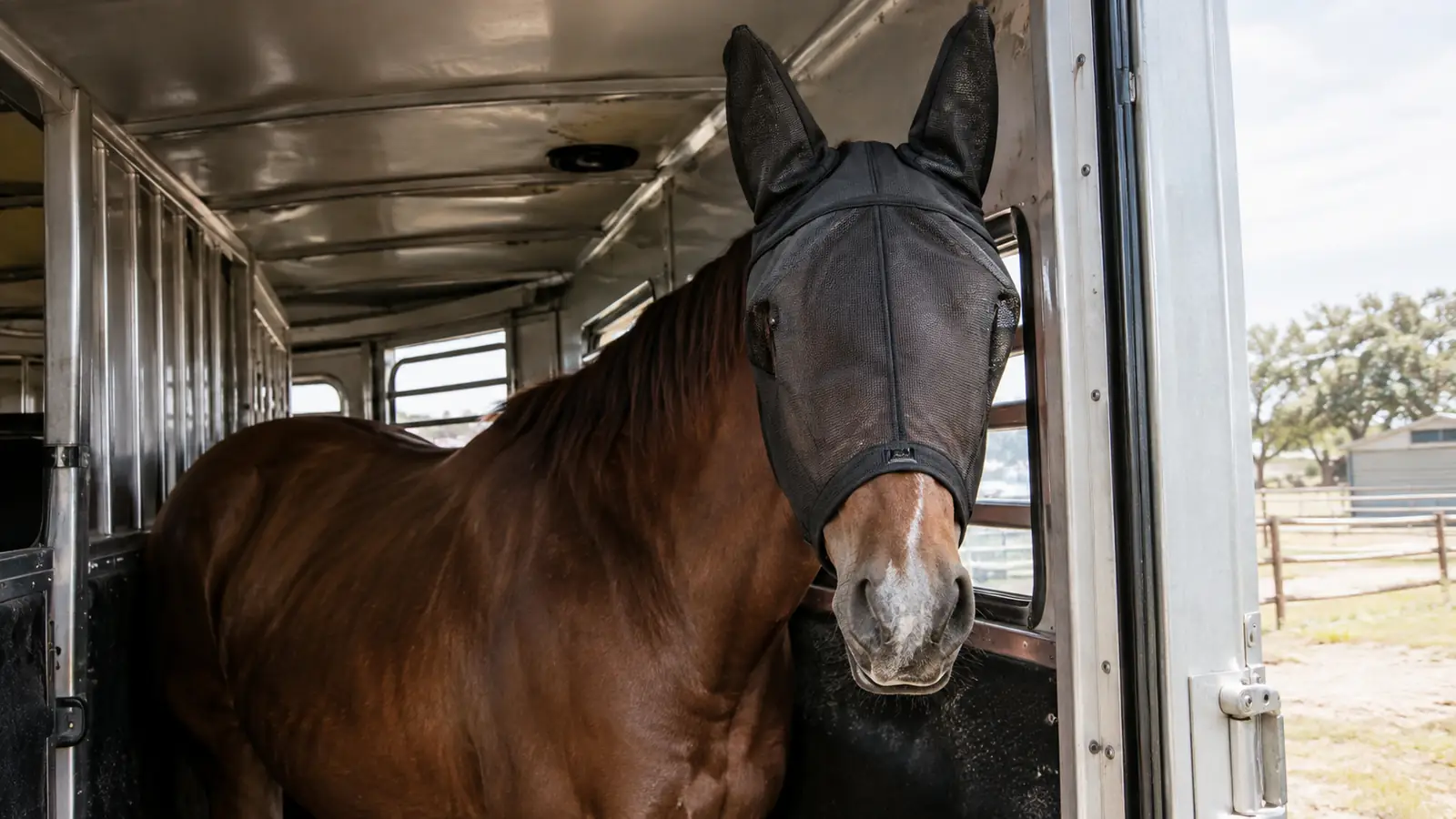
Through the season, the mask came off only for the actual barrel run. He wore it in the warmup pen, I took it off at the gate, and it went right back on as soon as we were out of the arena. It also stayed on in the trailer, which I did not expect. The padded ears muffle the noise of the road, and Biscuit rides calmer with it on than with it off. I have hauled him to jackpots with that mask on for the better part of a year, and it has never shifted on his face during the drive.
When it got dirty, I hosed it off and let it dry in the shade. A few times I washed it in the washing machine inside a pillowcase on the gentle cycle, then let it air dry. That was it. No special treatment, no careful handling, and it still looks like a fly mask instead of a rag, which is more than I can say for some of the ones I have owned. If you want the longer version of that first season, I wrote it down [here](/cashel-crusader-fly-mask-advertorial-story).
What the Long Nose and Ears Actually Do
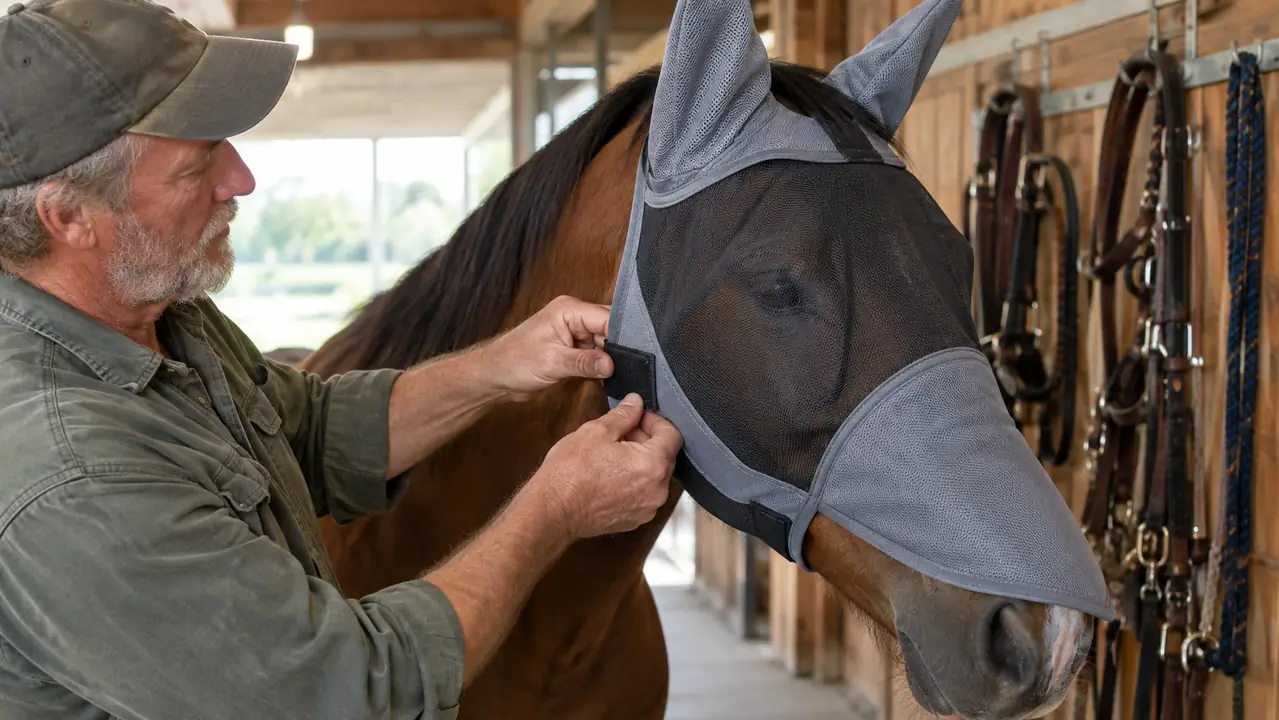
The ears are the reason most people buy this mask. They are quilted and padded, and they cover the horse's ears completely. That cuts down on the noise of flies buzzing right next to the ear, and for a horse that spooks at sound, it makes a real difference. Biscuit is not a nervous horse in general, but he is jumpy about things buzzing around his head. With the Crusader on, he stands still when flies are thick instead of dancing around.
The long nose piece does what the name says. It covers the muzzle and the front of the face, so flies cannot land on the soft skin around the nostrils or the corners of the eyes. That matters for a horse that works, because a face full of fly bites is how you end up with a head-shy horse at the saddle. The mesh is fine enough to keep flies out but open enough that he can see clearly. I have never seen Biscuit hesitate at a barrel or trip in the alley with this mask on, and I would not run him with something that blocked his vision.
The whole thing is one piece of mesh, so there are no seams for a fly to sneak through or for a horse to catch on a fence post. It breathes well even in the middle of a Texas summer. I have taken it off him after a hot afternoon, and his face was not sweaty under it, just warm. For a mask that covers as much as this one does, that is the thing that surprised me most.
How It Held Up Over a Full Season
The honest answer is better than I expected. Biscuit wore this mask every day from the first of April through the end of October. It went on before turnout in the morning, stayed on through the day, and came off at night. On weekends it rode in the trailer with him. That is a lot of hours in the sun, a lot of rubbing against fence posts, and a lot of being tossed into the tack room when I was in a hurry.
The mesh has no tears and no thin spots. The quilted ears are still puffy, not flattened into pancakes. The long nose piece has held its shape, which is the part I worried about, since it sticks out past the muzzle and takes the most abuse. The only real wear is on the hook-and-loop closures. The throat latch velcro got a little lazy around the four month mark. It still holds, but I have to press it down firmly, and I know I will be replacing the velcro before I replace the mask.
I will also say this: the mask does not stop every single fly. A determined fly can still land on the muzzle right at the nostrils, because the mask cannot cover the open end of the nose. What it does is keep flies off the eyes, the ears, and the tender skin on the face, and that is where the damage happens. Biscuit kept his hair this year. That has not happened in the past five summers. He still flicked his ears at the worst of the fly pressure, but he stopped rubbing his face on the fence, and the bare patches on his cheeks grew back by the middle of May.
One thing I checked every few weeks was the fit. A fly mask that gets loose is a fly mask that comes off, and a horse wearing a half-off mask is worse off than one wearing nothing. The Crusader never stretched out. The elastic around the crown stayed snug, and the hook-and-loop closures stayed where I put them. That is the part you cannot see in a product photo, and it is the part that matters most by August.
Where the Crusader Falls Short
Nothing is perfect, and the Crusader has a few things you should know before you order. First, it runs snug. Cashel cuts their masks to fit close to the face so they do not shift, and that means you need to measure your horse's head before you buy. I got lucky with Biscuit, but I have heard from plenty of people who ordered the wrong size and had to send it back.
Second, the covered ears are not for every horse. Some horses hate having their ears touched, let alone covered, and no amount of patience will convince them otherwise. If your horse is one of those, the long nose version without ears, or a basic mask, will go over a lot easier. Give a horse a couple of days to get used to the ears before you decide, but if they are still fighting it after a week, it is not the right mask for that horse.
Third, the velcro will wear out before anything else on the mask. That is true of every fly mask I have owned, but it is worth saying plainly because the Crusader costs more than a basic mask and people expect it to last forever. It will last a long time. The velcro is the part you will fix first.
The Alternatives I Considered
The main alternative in this price range is the Farnam Supermask, and I have used those too. The Supermask is a good, tough mask, and it has its fans. The big difference is the ears. The Supermask covers the eyes and face, but it does not have the padded, sound-muffling ears that the Crusader does, and for a horse that spooks at noise that is the whole ballgame. I put together a full [side by side comparison](/cashel-crusader-vs-farnam-supermask) of the two if you want the details.
For a horse that does not need the ears, a simpler mask will do the job for less money. That is not a knock on the Crusader. It is just that you should buy the mask that fits your horse's problems, not the mask with the longest list of features. I have a basic mask for the other two horses on the place, and they are fine with it. Biscuit gets the Crusader because he needs what it does.
What I Liked
- Padded ears muffle noise and calm a horse that spooks at buzzing
- Long nose covers the whole face and keeps flies off tender skin
- Survived a full season of daily wear and weekend hauling with no tears
- Stays put on a horse that used to throw masks over the fence
- Clear mesh keeps vision open, safe in the arena and the trailer
- Washes easily and dries fast
Where It Falls Short
- Hook-and-loop closures wear out first, plan on replacing the velcro
- Runs snug, measure carefully before ordering
- Some horses will not accept covered ears
- Costs more than a basic mask, worth it only if your horse needs the ears
Biscuit wore this mask every day from April through October, and he kept his hair for the first summer in five years.
Who This Is For
If your horse spooks at flies buzzing around his head, if you haul to events and want a calmer trailer ride, or if you are tired of finding fly masks in the pasture instead of on your horse, the Crusader is worth a hard look. It is built for horses that live outside and work on weekends, which is a specific combination, and it handles both sides of that life. If your horse only goes out for an hour a day, you can probably get away with something simpler. This mask earns its keep on horses that live in the pasture and work on the road.
It is also for people who are tired of replacing cheap masks every few months. The Cashel Crusader is not the cheapest mask on the shelf, but it is the one that lasted through the season without a tear, and that math works out in the long run. I wrote out [ten reasons a fly mask protects a rodeo horse](/10-reasons-fly-mask-protects-rodeo-horses) if you want the longer version of why I keep one on Biscuit.
Who Should Skip It
If your horse will not accept covered ears after a fair chance, skip it. There is no sense forcing a mask that upsets the horse more than the flies do. And if your horse lives in a stall and only goes out at night, a basic mask will do everything you need for less money.
The long nose version is also cut for a horse with a normal to longer muzzle. If your horse has a very short face, the standard length Crusader is the better fit. And if you are the kind of person who loses or breaks a mask every season, this one will not fix that. It is durable, but it is not indestructible.
Give your horse a full season without the fight
The Cashel Crusader fly mask with long nose and ears is the one I keep on Biscuit from April to October. If your horse has the same problem with flies and noise, it is worth checking today's price.
Amazon Check Today's Price on Amazon →