
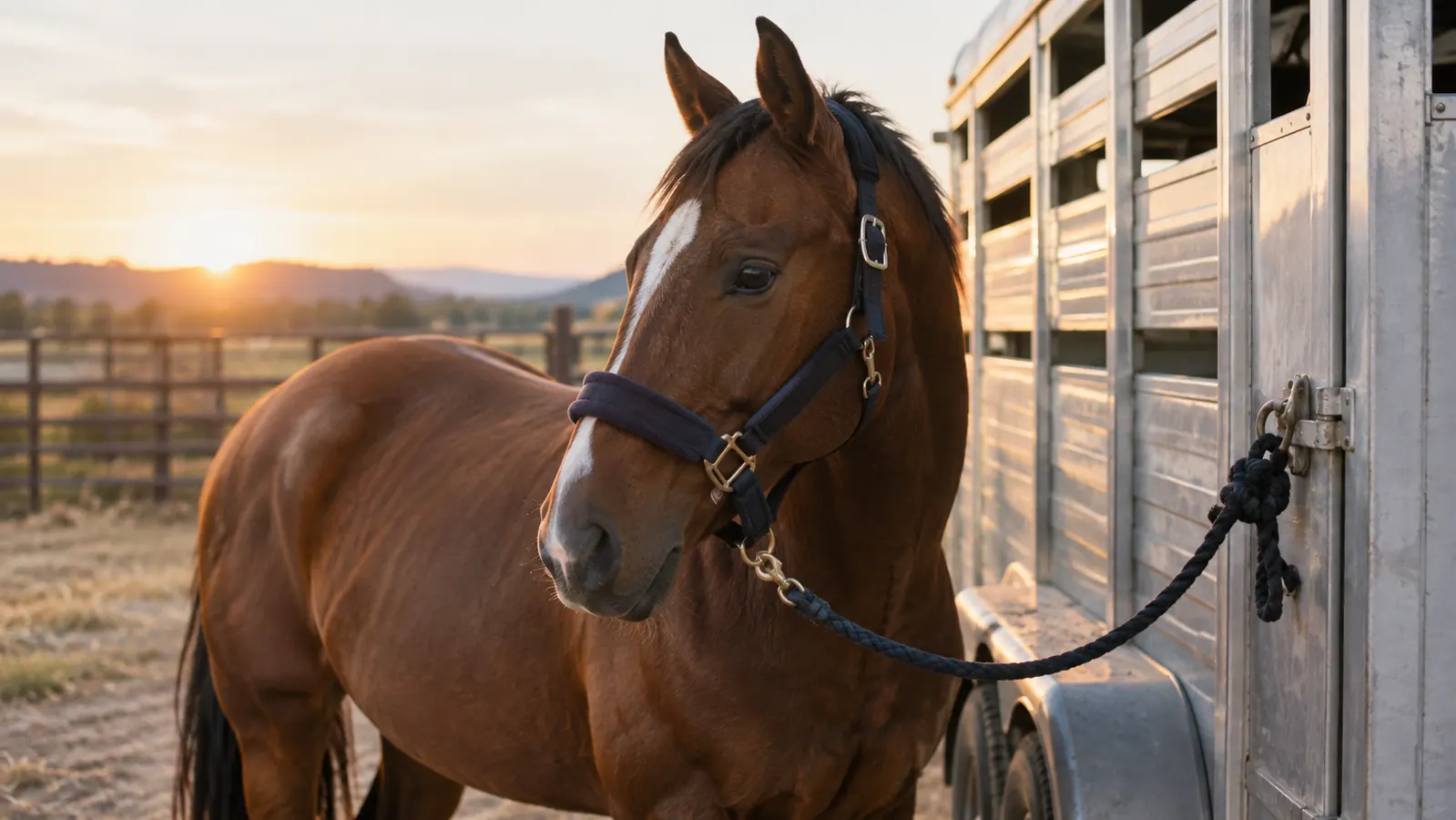
I will tell you straight: the Tough 1 padded halter is the halter I reach for on haul days, and it is also the halter that taught me to check every buckle before I load. That is the honest review in one sentence. I am Darla Kincaid, I have been around rodeos my whole life, and I have spent enough years behind the chutes to know that tack reviews usually leave out the parts that matter on a real weekend. So here is what nobody tells you about this halter.
I have used this halter on Biscuit, my 14-year-old sorrel quarter horse gelding, for six months. He wears it in the trailer, at the jackpot grounds, and tied to the fence while I film runs from the rail. It has been rained on, baked in the Texas sun, stepped on once, and dragged through gravel when he pulled back. It has held up better than I expected, and it has a few flaws I would fix if I owned the factory.
The Quick Verdict
A solid, comfortable everyday halter that fits most horses well and survives real use. Buy it for the padding and the price. Just check the hardware before every haul.
Amazon Check Today's Price →A padded halter that handles the haul and the jackpot
If you want a halter that pads your horse's face without padding the price, this is the one I keep coming back to.
Amazon Check Today's Price on Amazon →How I've Used It
Biscuit is a 14-year-old sorrel quarter horse gelding, about 15 hands, and he trailers well but he is not dainty about it. He will rub his head against the divider, lean into the butt bar, and generally treat the trailer like it is his personal stall. I wanted a padded halter because bare nylon leaves rub marks on his face after a long haul, and I was tired of seeing white hairs where the noseband sat.
For the past six months, this halter has been on his head for every trip to a local jackpot, every practice run in the pasture, and every time I tied him to the trailer while I set up my camera. That is roughly two to three hauls a week, plus all the times he wears it around the place for an hour or two. It has also been through one genuine pull-back incident when a loose feed sack flapped in the wind and he decided the whole setup was a threat.
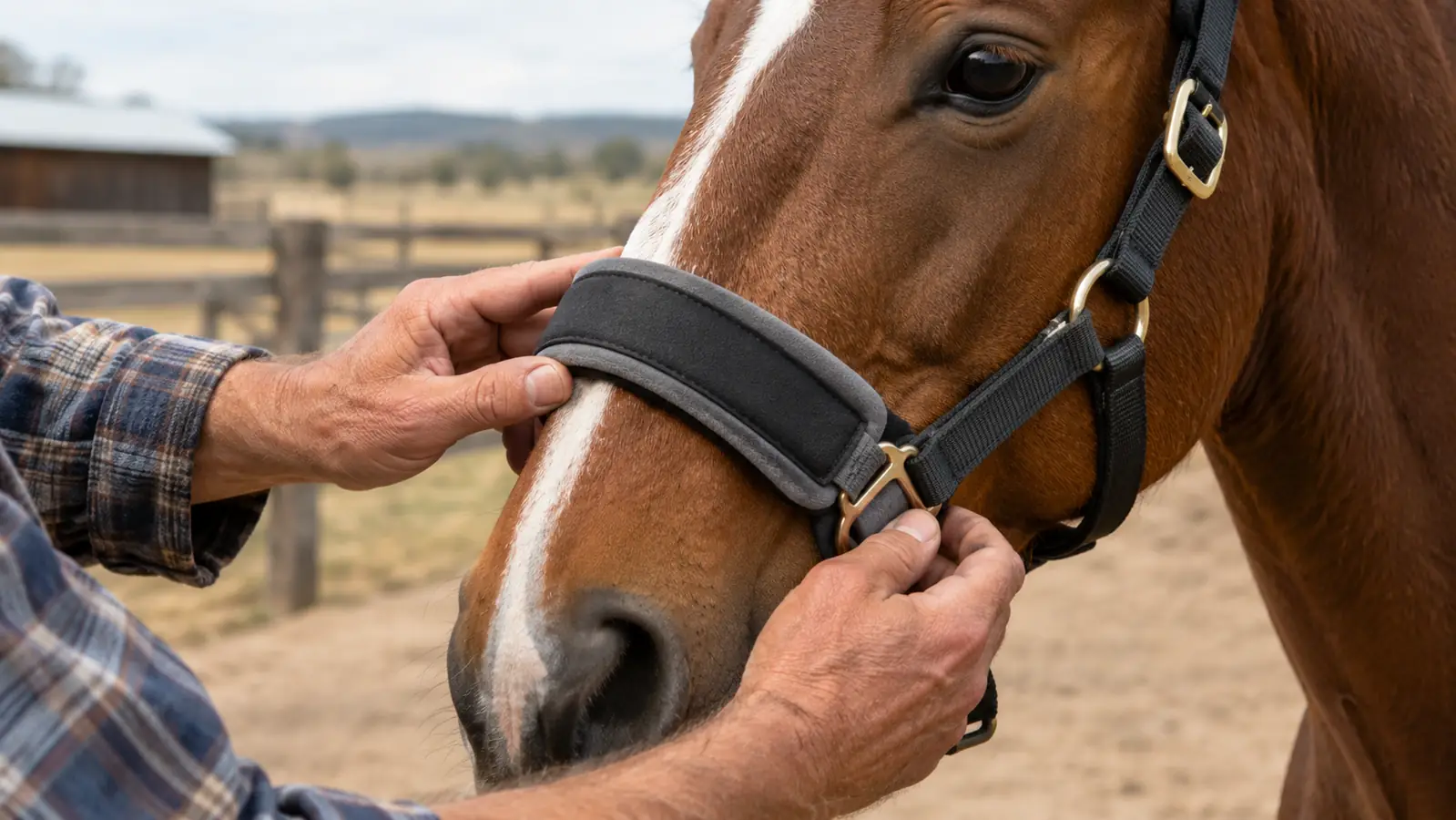
The padding is the first thing you notice. It runs along the noseband and the crown piece, and it is thick enough that I can feel the difference when I buckle it. Biscuit quit shaking his head as much on the highway, and the rub marks on his face have faded. That alone made the halter worth trying. But the padding is also the thing that makes you look twice at the hardware, because the metal has to do the work while the padding takes the blame.
The first weekend I put it to real work was the first Saturday in March, a jackpot about forty-five minutes from the house. I had bought the halter the Tuesday before, after the bare nylon halter I had been using left a raw spot on Biscuit's cheekbone during a two-hour haul to a rodeo in Glen Rose. That morning I buckled the Tough 1 on in the barn, ran my thumb around the noseband padding, and loaded him into the two-horse bumper-pull. Two hours of highway later, I backed him off the trailer and ran my hand down his face before I saddled him. No raw spot. No white hairs pressed flat. I stood there with my palm on his cheek and told myself the halter had already earned its keep. The rest of the day it hung from the trailer post while he warmed up, and I put it back on for the drive home. That was the day I stopped reaching for the old nylon halter.
Hardware: The Part Nobody Talks About
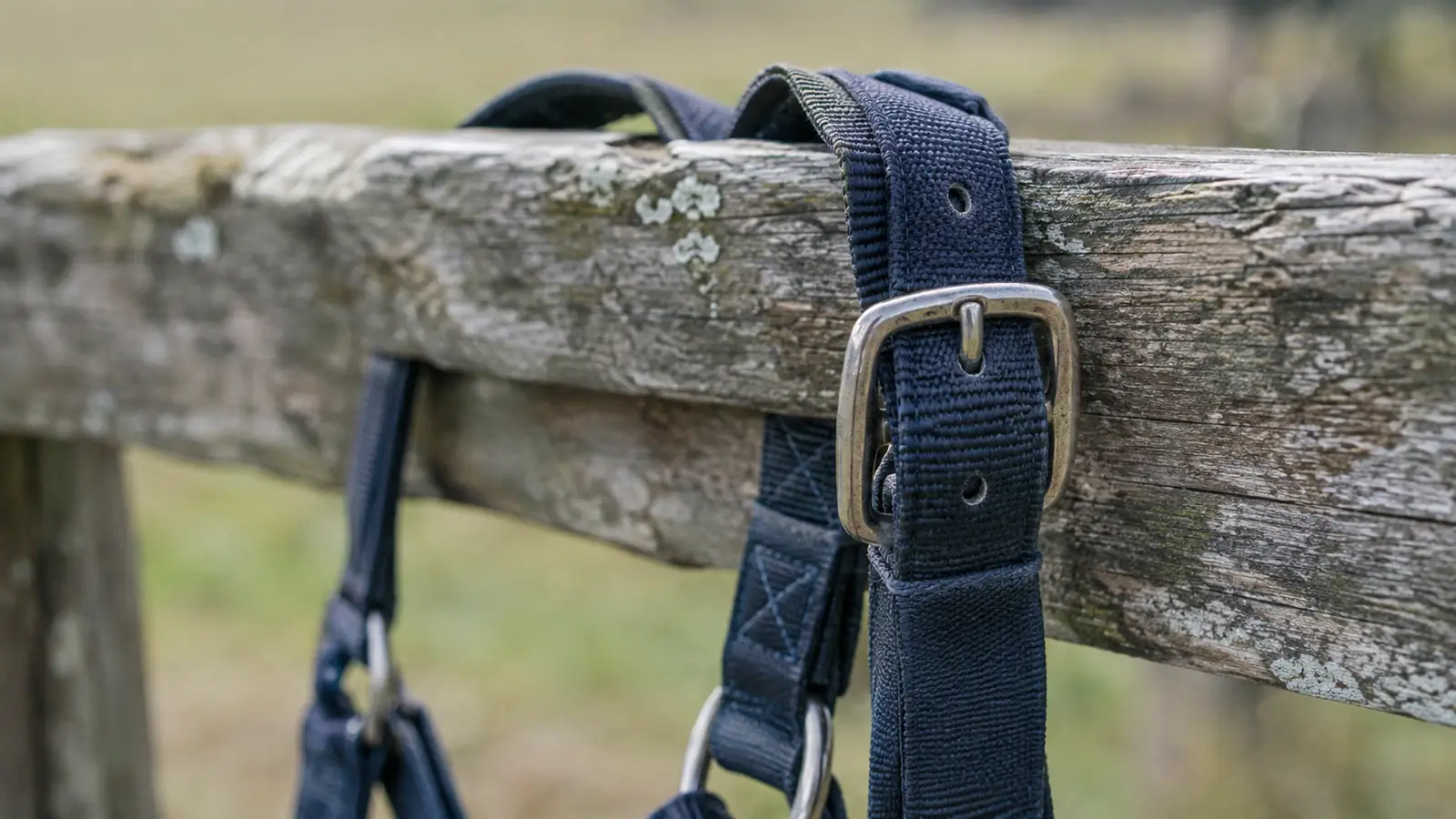
The hardware on this halter is antique brass finish, which looks nice in the tack room and matches just about any saddle blanket you already own. What matters more is how it is attached. The buckles are sewn into the nylon, not riveted, and that is both good and bad. Good because a sewn buckle sits flatter against the horse's head and does not poke. Bad because if the stitching wears through, the buckle is gone and the halter is done.
I check the stitching around the buckles every time I tack up now. On one halter I bought a few years ago from a different brand, the thread around the throat latch buckle let go at a jackpot, and I ended up leading a horse by a loose piece of nylon and hoping. That experience taught me to look, and this halter has not failed the same way. The stitching is dense and the thread feels heavy. But it is still thread, and thread wears.
The other hardware note is the snap on the lead rope. The halter comes with a lead rope with a snap that is sturdy and easy to work with gloved hands. I have used it to tie Biscuit to the trailer, to the fence, and to the hitch rail at a couple of different rodeo grounds. The snap has not bent, the spring has not stuck, and the rope itself is soft enough to coil without fighting you. That is more than I can say for some lead ropes that cost more on their own.
I will tell you what I tried first, because that is the honest part. Before I bought this halter, I tried a cheaper web halter from a feed store in town, the kind with a thin buckle and hardware that looked fine in the package. The first time Biscuit set back against it, the buckle straightened and the whole crown slipped through the keepers. I came home with a bent piece of metal in my pocket and a horse that had learned he could break free. That is why I check hardware the way I do now. On the Tough 1, the buckle tongue is wide enough that it seats fully into the hole, and the keepers are stitched tight enough that the strap does not creep. The snap on the included lead rope is a solid swivel snap, about four inches long, and the swivel has not locked up once in six months of dust and weather. The lead rope itself is twelve feet of braided poly, soft enough to tie around the trailer post without kinking, and it has not frayed at the snap end in all that time.
The padding is thick enough that Biscuit quit shaking his head on the highway, and the rub marks on his face faded. That alone made the halter worth trying.
Stitching: Where It Holds and Where It Might Not
I have put this halter through six months of rodeo weekends, and the stitching has held. The seams around the noseband padding are still tight. The crown piece has not stretched or pulled loose. The throat latch has not frayed. I have washed it twice with saddle soap and a soft brush, and the thread still looks like it did the day it arrived.
But I have also seen the weak spot. The stitching where the lead rope ring attaches to the chin piece is the first place I would expect trouble, because that is where the most force lands when a horse pulls back. Mine is still fine, but I can see the thread starting to show a little wear on the underside. It is not a defect, it is physics. Every time a horse sets back, that ring takes the whole load.
If you buy this halter, do yourself a favor and run your thumb along that seam once a month. If the thread starts to look fuzzy or flat, replace the halter before it fails. A halter is cheap. A horse that gets loose on the highway is not.
Here is the day that made me a believer in checking seams. The last Saturday in June I was at a jackpot in Stephenville, and a friend asked me to look at her mare's halter because the noseband had started to fray. It was the same brand of web halter I had thrown away in the spring, and the stitching had let go right where the ring meets the chin piece, the exact spot I worry about on this one. I walked back to my trailer, ran my thumb along the same seam on the Tough 1, and found a single thread standing up. Just one. I trimmed it with my pocketknife, checked the rest of the seam, and it held fine all weekend. That thread was a reminder, not a warning. But it is the reason I tell people to look at that seam the same way you look at a cinch before you tighten it. A halter that fails on the highway is a wreck you do not get to choose. I would rather trim a loose thread in the barn than explain to a vet how my horse got loose on the interstate.
Fit: True to Size, With One Caveat
The halter comes in sizes, and I will tell you what I learned the hard way: measure your horse's head before you order. Biscuit is a typical quarter horse, and the large fits him well. The noseband sits about two fingers below his cheekbone, the crown piece buckles in the middle of his poll, and the throat latch is snug without being tight. That is the fit you want, and it took me less than two minutes to adjust.
The caveat is the padding. Because the noseband is padded, it takes up a little more room than a bare nylon halter. If your horse is between sizes, size up. A halter that is too small will rub the corners of the mouth and put pressure right on the facial nerve, and that is not something you want to learn at a jackpot. When in doubt, go up a size and adjust the crown buckle down.
What It's Like on a Real Rodeo Weekend
Here is the test that matters. Friday afternoon, I loaded Biscuit for a two-hour drive to a jackpot. He wore the Tough 1 halter under his shipping boots, and I did not have to adjust it once on the road. When I backed him off the trailer, he shook his head once, which for him is a good sign. I tied him to the trailer with the included lead rope, saddled him, ran him in the first round, and cooled him out with the halter still on.
The padding did exactly what I wanted. No rub marks on his face after two hours in the trailer. No sore spots behind his ears after wearing it all afternoon. And when I went to lead him back to the trailer in the dark, the antique hardware caught the arena lights enough that I could find the buckle without fumbling. That is a small thing, but it matters when your hands are cold and the horse is ready to go home.
The one time I was glad I had checked the hardware was the pull-back incident. Biscuit spooked at a feed sack, threw his head up, and set back hard. The halter held. The lead rope held. The trailer tie held. He stood there shaking, and I stood there with my heart pounding, and neither of us had to learn anything the hard way. That is the review that matters.
The hottest day we hauled was the third weekend in July, when the thermometer at the fairgrounds read 103 by noon. I left the halter on him between classes because the padding kept the sun off the bridge of his nose, and I soaked a towel to lay across his poll under the shade of the trailer. The nylon stayed cool enough that he did not fight it, and the antique hardware did not get hot enough to burn my hand when I unbuckled him. That night I hung the halter on the trailer post to air out, and the next morning it was dry and ready. I have owned web halters that stayed damp all day after one sweaty haul and started to smell by evening. This one dried out overnight, and that matters when you haul every weekend in Texas heat. It also washed up clean with a bucket of water and a rag, which is more than I can say for the fleece-lined halter I borrowed once that held every piece of dust on the road.
Pros and Cons
What I Liked
- Thick padding on the noseband and crown that protects against rubs on long hauls
- Sturdy antique-finish hardware that looks good and works with gloved hands
- Included lead rope with a dependable snap that does not bind
- True-to-size fit for a typical quarter horse, with room to adjust
- Holds up to real use: rain, sun, gravel, and one genuine pull-back
Where It Falls Short
- Sewn-on buckles mean the stitching is the weak point, so you have to inspect it regularly
- Padding makes the fit a little bulkier than bare nylon, so size up if your horse is between sizes
- Antique finish will show wear faster than plain nickel, so it is not a show halter
- No breakaway feature, so do not leave it on a horse turned out in a pasture
Who This Is For
This halter is for the person who hauls a horse several times a week and wants something that will not rub a raw spot on the way to the jackpot. It is for the barrel racer who ties her horse to the trailer while she walks the pattern, the roper who wants a halter that matches his saddle blanket and does not fall apart, and the ranch family that needs a spare halter that can live on a hook in the barn and still be ready to go.
It is also for the person who understands that no halter is indestructible. This one will last a long time if you check the stitching and do not leave it on a horse that is turned out. It is a working halter, not a show halter, and it knows its job.
Who Should Skip It
Skip it if you need a breakaway halter for pasture turnout, because this one does not have a breakaway crown. Skip it if you want a show halter that stays pretty, because the antique finish will show wear and the padding adds bulk. And skip it if you are the kind of person who will never check the stitching, because every sewn halter eventually needs an eye on it.
Also skip it if your horse is between sizes and you do not want to think about fit. The padding means you have to be a little more careful about sizing, and a halter that is too small is worse than no halter at all.
The halter I keep reaching for on haul days
Six months in, the Tough 1 padded halter has earned its spot on my trailer hook. If you want padding that protects and hardware that holds, check today's price.
Amazon Check Today's Price on Amazon →