
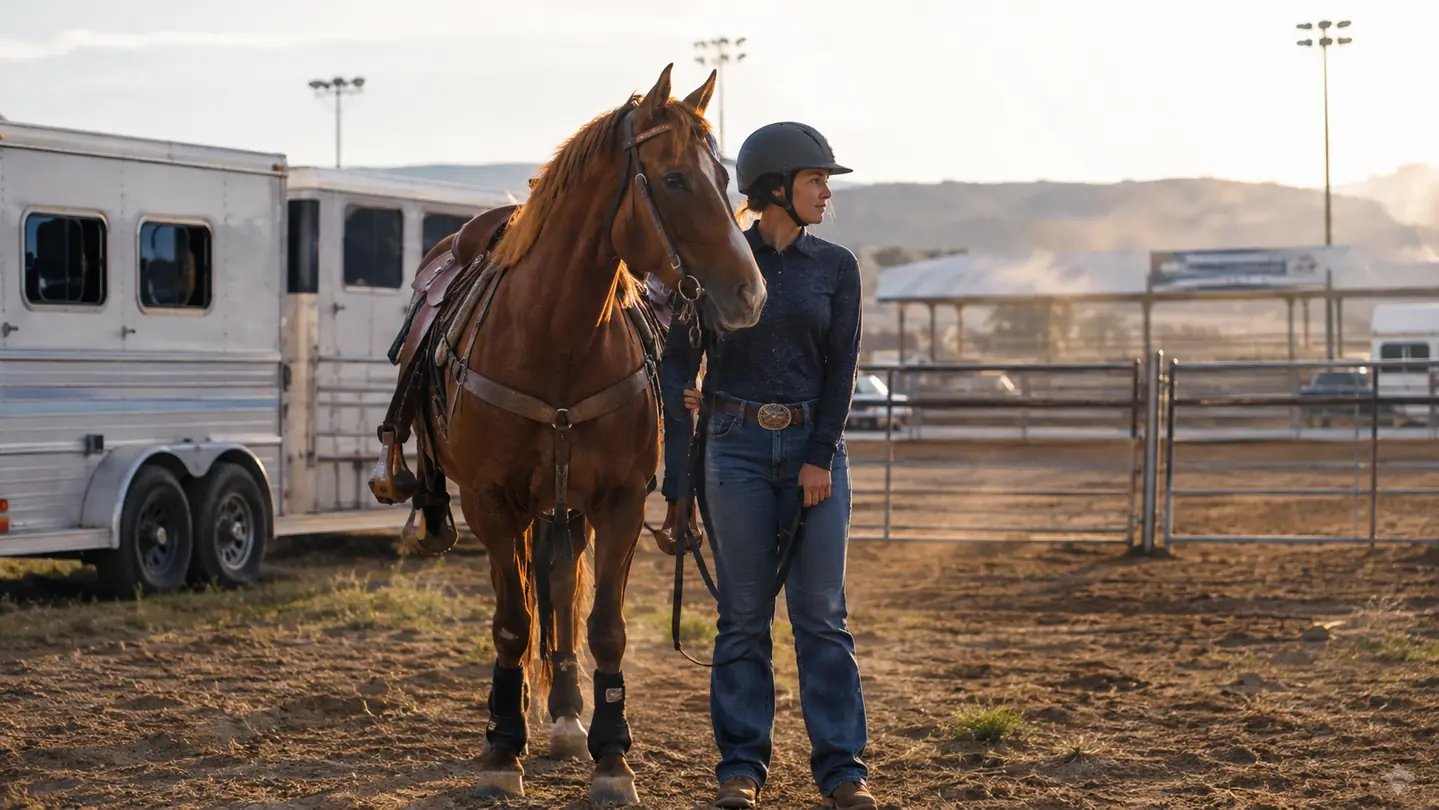
If you have ever stood at the trailer with a horse that will not stand still, head tossing, legs stomping, tail swinging, you already know what a bad fly day does to a run. The horse that spends the hour before the pattern fighting flies is not the horse that scores. I have been around rodeos my whole life, and I have watched more than one good run fall apart because the horse was worn out before the gate even opened. My own horse, Biscuit, is a 14-year-old sorrel quarter horse gelding, and he has taught me more about flies than I ever wanted to know. The fix is not complicated. You need a fly spray that actually lasts, and you need a routine that gets it on the horse at the right times.
The one I keep coming back to is Absorbine UltraShield EX. It is the fly spray I reach for on a rodeo weekend, and this is the exact routine I use with my own horses, from the first spray at the trailer to the last one before the drive home.
Start the weekend with a fly spray that lasts through the run
Absorbine UltraShield EX goes on once and keeps working through hauling, warm-up, the run and the cooldown. Check today's price on Amazon and keep a bottle in the trailer.
Amazon Check Today's Price on Amazon →Step 1: Spray before you load, not after you arrive
The first mistake most people make is waiting until they get to the rodeo grounds. By then the horse is already hot, already nervous, and already getting bitten in the trailer. Flies do not wait for you to be ready. They are in the trailer, at the gate, around the warm-up pen, everywhere. If you spray at home before you load, the horse steps into the trailer already protected, and that protection is working while you drive. The spray needs a few minutes to set, and the trailer is the last place you want to be doing that.
I spray Biscuit at the barn about ten minutes before I load him. I give the bottle a good shake, spray from the neck down both sides, get the belly and the legs, and do not forget the chest. Then I let it dry for a couple of minutes before the trailer. Absorbine UltraShield EX dries fast, which matters because a wet horse in a dusty trailer is a mess you do not need. One Saturday in June I had him sprayed and loaded by 7:15, and we pulled out of the drive before the flies got going. By the time we reached the grounds, the spray had dried into the coat, and he stood at the trailer with his head down instead of swinging it at his sides. That is what a good start looks like.
One note on coverage: flies go for the places a horse cannot reach. The face, the ears, the belly, the inside of the legs. I spray a little on a soft cloth and wipe the face and ears rather than spraying directly at the eyes. The label says it is safe for use on horses, but I still keep spray away from the eyes and nostrils. A calm horse is easier to protect than a horse that just got a face full of spray. I learned that the hard way one August afternoon when I got too close with the nozzle and Biscuit threw his head back. Nobody got hurt, but it took ten minutes to settle him down before we could even think about saddling. Now the cloth comes out first.
Step 2: Reapply at the trailer before warm-up
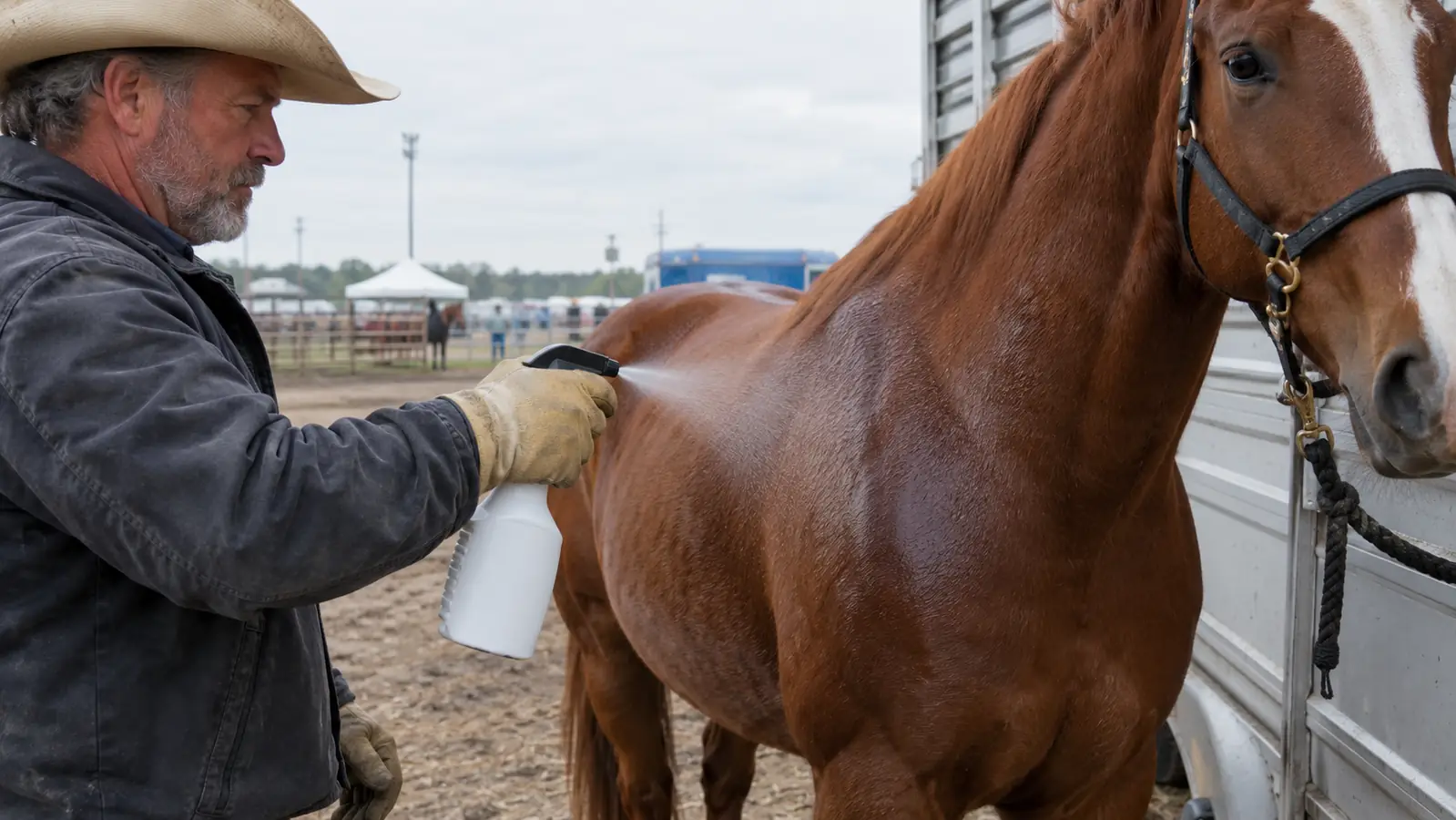
Once you arrive, tie the horse at the trailer and give the coat a quick once-over. The drive can rub off some of the spray, especially where the halter and the blanket sit. I do a fast touch-up on the neck, the chest and the belly, the spots that get the most rubbing and the most fly pressure. This is not a full re-spray. It is a two-minute top-up that closes the gaps. It is the same routine whether we are at a local jackpot or a three-day rodeo, and that consistency is what keeps the horse calm.
This is also the time to check the legs. Flies love the lower legs, and a horse that is stomping in the warm-up pen is a horse that is not paying attention to the job. I spray down each leg, front and back, and I pay extra attention to the pasterns. It takes less than a minute and it saves an hour of stomping. At a jackpot outside Mineral Wells last September, the flies were so thick you could hear them before you saw them. I did the top-up at the trailer, then sprayed his legs again before I saddled. He stood quiet through the warm-up while half the horses in the pen were stomping and wringing their tails. That is the whole point.
If the grounds are bad, and some grounds are truly bad, I will also spray the belly again right before I saddle. The belly is the one spot that always seems to need more. Absorbine UltraShield EX has a sprayer that covers a wide area fast, so this does not turn into a ten-minute project. Spray, rub it in with a gloved hand, saddle up.
Step 3: Use a fly sheet and mask for the long waits
Fly spray is the base of the plan, but it is not the whole plan. On a long rodeo day, the horse spends hours standing tied to the trailer while the sun moves and the flies keep coming. That is where a fly sheet and a fly mask earn their keep. The sheet covers the body, the mask covers the face, and the spray handles the legs and the belly that the sheet does not cover.
I keep a fly sheet and mask in the trailer all season. They are not fancy. They are the kind that have been through a hundred washes and still do the job. When the wait between events runs long, I put the sheet on, and I do not have to think about flies for the next couple of hours. The horse stands quiet, and a quiet horse is a fresh horse. I remember one Fourth of July weekend where the wait ran close to three hours. I had the sheet on Biscuit by nine in the morning, and he stood tied to the trailer with his eyes half closed while horses without sheets were switching tails and stamping. When the time came to saddle, he was the freshest horse in our group.
The combination matters more than either one alone. The sheet stops the flies that land on the body. The spray stops the flies that land on the legs and the belly. The mask stops the flies that go for the eyes and the ears. Together they cover everything, and the horse does not spend the day fighting. The sheet I use is a plain mesh sheet that snaps in front. It does not cover the legs, which is why the spray still matters. If the day is hot, I take it off while he is working and put it back on as soon as he is cooled out.
Step 4: Spray again after the run, before the cooldown
The run itself is the easy part. The horse is moving, the flies cannot keep up, and for thirty seconds nobody is thinking about bugs. The hard part is the cooldown. The horse is hot, sweaty, breathing hard, and standing still. That is when the flies move in, and that is when a horse that was perfectly calm all day suddenly starts dancing. The sweat and the motion of the run can leave gaps, especially along the saddle area and the girth.
I spray again as soon as I loosen the cinch. Not a heavy coat, just a good pass over the neck, the chest and the belly. The sweat does not wash the spray off, but a fresh layer on top of a sweaty coat gives the horse immediate relief while I walk him out. Then I let him cool down on a long line, and the flies are not part of the picture. After a clean run at a local jackpot in April, I loosened the cinch, walked Biscuit to the shade on the north side of the trailer, and gave him a fresh pass over the neck and chest. He dropped his head and started grazing while horses around us were still pacing. That is the cooldown you want.
This is the step most people skip, and it is the step that matters most for the drive home. A horse that cools down calm loads better, hauls better and gets home in a better frame of mind. The spray is not just about comfort at the grounds. It is about the whole weekend working. I have seen horses come home from a weekend with welts along the belly and under the jaw, and those are the horses that are hard to catch on Monday. A little spray at the right time keeps that from ever starting.
Step 5: Do a final spray before the drive home
The drive home is the last place people think about flies, and it is one of the worst. The trailer is warm, the windows are open for air, and the flies follow the horse right in. A horse that gets bitten all the way home arrives cranky, and a cranky horse is a horse that does not want to be caught next weekend. On a hot Texas afternoon, the inside of a bumper-pull trailer can feel like an oven, and flies seem to find their way in through every gap around the windows and the ramp.
Before I load up, I do one more spray. Same routine as the morning: neck, both sides, belly, legs, chest. I let it dry for a minute, then I load. The horse rides home protected, and the trailer does not turn into a fly trap. It takes two minutes and it saves the whole ride. One night we got home after midnight, and I could see fresh bites on the legs of the other two even though they had only been in the trailer for the drive back. I made myself a rule that night: the final spray happens before the load, every time, no exceptions.
I also keep a small bottle of Absorbine UltraShield EX in the tack compartment of the trailer all season. That way the routine is the same at every rodeo, every jackpot, every practice. The spray is always there, the horse knows the routine, and the flies never get a vote.
What Else Helps
Fly spray is the backbone, but a few other things make the whole system work better. A fly mask with ears covers the two spots flies love most. A fly sheet handles the long waits. A little fly repellent wipe in the glove box handles the face and ears without overspray. And a clean trailer, swept out between trips, gives flies fewer places to hide. None of these replace the spray. They just make it work harder.
The other thing that helps is timing. Flies are worst in the middle of the day and right around dusk. If you can do the morning spray early and the evening spray late, you cover the worst hours. The spray does the work, but you still have to put it on at the right time. I also sweep the trailer out after every trip, even when I am tired. A clean floor with no hay scraps and no manure means the flies have nowhere to breed and nowhere to hide. It takes five minutes with a stiff broom, and it makes the final spray work like it should.
The horse that spends the hour before the pattern fighting flies is not the horse that scores.
Keep a bottle in the trailer all season
Absorbine UltraShield EX is the fly spray I keep in the tack compartment from spring through fall. Check today's price on Amazon and make it part of your rodeo routine.
Amazon Check Today's Price on Amazon →