
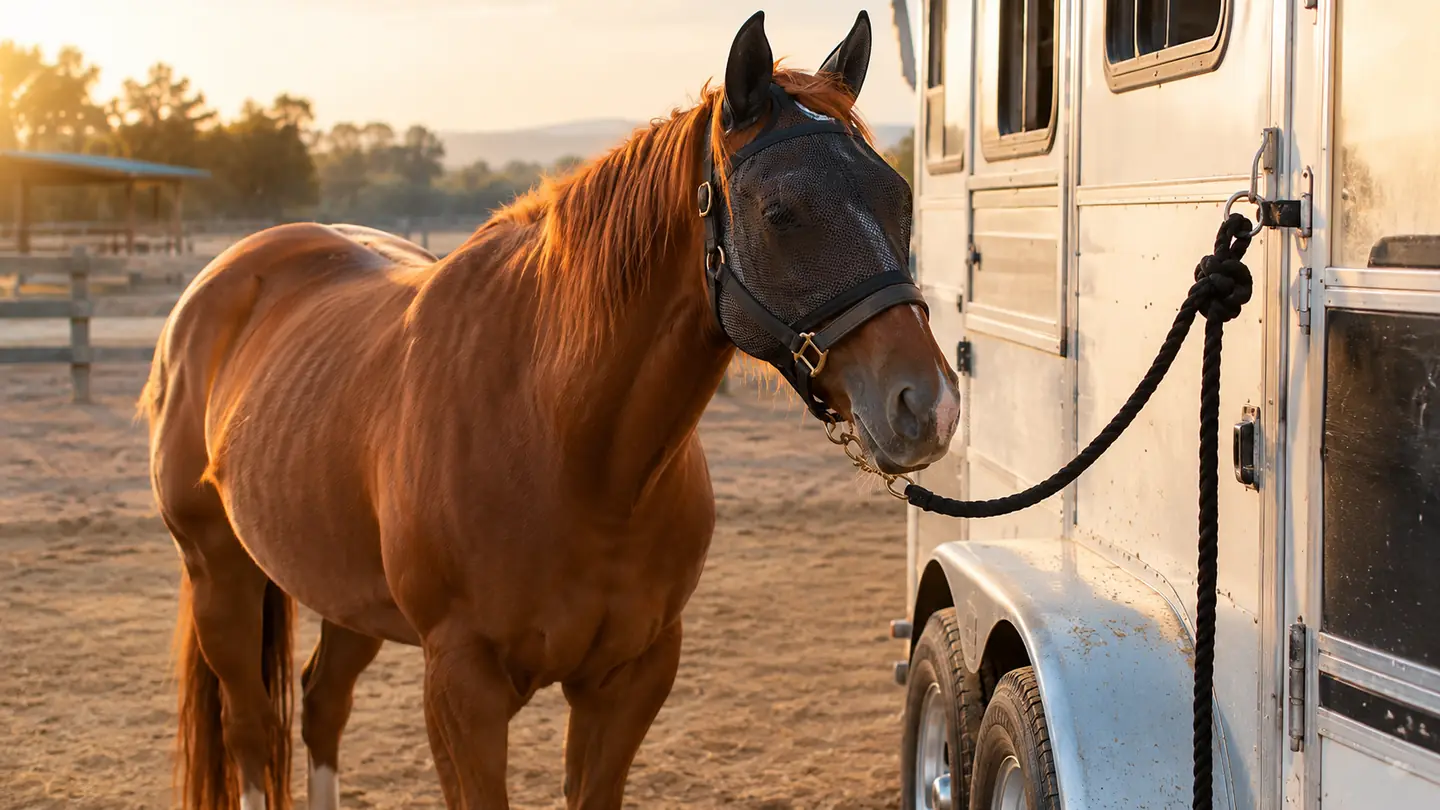
If you haul to as many jackpots as I do, you have seen both of these fly masks a hundred times. The Cashel Crusader with the long nose and ears is the one you notice on horses that stand quiet at the trailer. The Farnam SuperMask II is the one that has been around so long it feels like part of the scenery. I have used both on my horses over the years, and I have strong opinions about which one I reach for first. I started with the Farnam because it was what the feed store in Weatherford stocked and it was the cheapest thing on the hook. It took me one full season of hauling to realize I was buying a new one every couple of months, and that the money I saved up front was going right back into replacements.
The short answer: the Cashel Crusader holds up better on a horse that lives on the road. The Farnam SuperMask II is lighter, cheaper, and easier to find at any feed store, but the Cashel fits tighter, covers more face, and survives the kind of rubbing and hauling that a rodeo horse goes through. This is not a lab test. It is a summer of Thursday night jackpots, Friday night runs, and one long, hot Fourth of July weekend in Parker County, with both masks rotated on the same horse. Both masks have their place, but they are not the same tool, and knowing the difference saves you money and aggravation. Here is the breakdown from a summer of using both.
| Cashel Crusader | Farnam SuperMask II | |
|---|---|---|
| Coverage | Long nose and ears, protects the whole face | Standard nose, no ear coverage |
| Fit | Snug, stays put on a rubbing horse | Loose fit, shifts on a hard-pulling horse |
| Durability | Heavier mesh, holds up to a full season of hauling | Lighter mesh, tears at the nose seam |
| Price | Costs more up front | Easier on the wallet |
| Best for | Horses that haul, rub, or live out in the sun | Turnout horses that do not get handled much |
Where the Cashel Crusader Wins
The Cashel Crusader wins on coverage, and that is the whole ballgame for a horse like mine. The long nose piece comes down a good three inches past his eye line and covers the muzzle down to the nostrils, so the sun is off the whole face, not just the eyes. The ears are built in, which matters more than most people think. Flies land on the ears constantly, and a horse that cannot flick them off gets miserable fast. My gelding Biscuit has a narrow face, and the Cashel fits him without gaping at the cheeks. The ear sections stand up on their own instead of folding over, and the whole mask sits close enough that he cannot get a hoof or a knee under the edge. I have seen the Farnam sit an inch off a horse's face where the mesh sags, and that gap is exactly where a fly will find its way in. That snug fit is what keeps it from sliding around when he shakes his head.
I put the Cashel on Biscuit for the first time on a Tuesday in early May, the week before a jackpot in Stephenville. It was a warm afternoon, flies already thick around the water trough, and I figured he would give me a fight. He stood there with his ears flicking for about ten seconds, then went back to eating hay like nothing had changed. That is the test I use for any fly mask: if a horse forgets it is wearing one, the fit is right. The Cashel passed that test the first day. The Farnam took him three or four sessions before he stopped tossing his head, and even then he would rub his face on his knee whenever we tied him to the trailer. By the second weekend, I could tie him to the trailer at a jackpot in Stephenville, leave him for an hour, and come back to find the mask exactly where I left it.
It also wins on durability. The mesh is heavier than the Farnam, and the seams are sewn tighter. I washed the Cashel every Sunday night for three months straight last summer, sometimes with a stiff brush to get the dust out, and it has not unraveled or stretched out. The hook and loop closures still grab like they should. On a horse that rubs his face on his knee when he is tied, that kind of construction is the difference between a mask that lasts the season and one that is trash by July. I have seen horses go through two of the lighter masks in a single season. Biscuit is still on his first Cashel, and it is going into its second season.
The stitching is the detail I notice most. The Cashel has double stitching along the nose seam and around the ear openings, and the edge binding is a heavier tape. I counted the stitch lines once out of curiosity: two rows along every seam that takes stress, plus a folded binding over the edge. The Farnam uses a single stitch line that pulls apart where the nose piece meets the mesh. I saw that happen on a friend's horse at a jackpot in June, a tear about two inches long right at the seam, and there was no fixing it. We tried duct tape to get through the weekend and it peeled off by the second class. The Cashel has never given me a loose thread, let alone a tear, and I check it the way I check the trailer tires before every haul.
The fly mask that stays put on a hauling horse
If your horse rubs, shakes, or lives on the road, the Cashel Crusader is the one that holds up. Check today's price on Amazon and see why it is the mask I load first.
Amazon Check Today's Price on Amazon →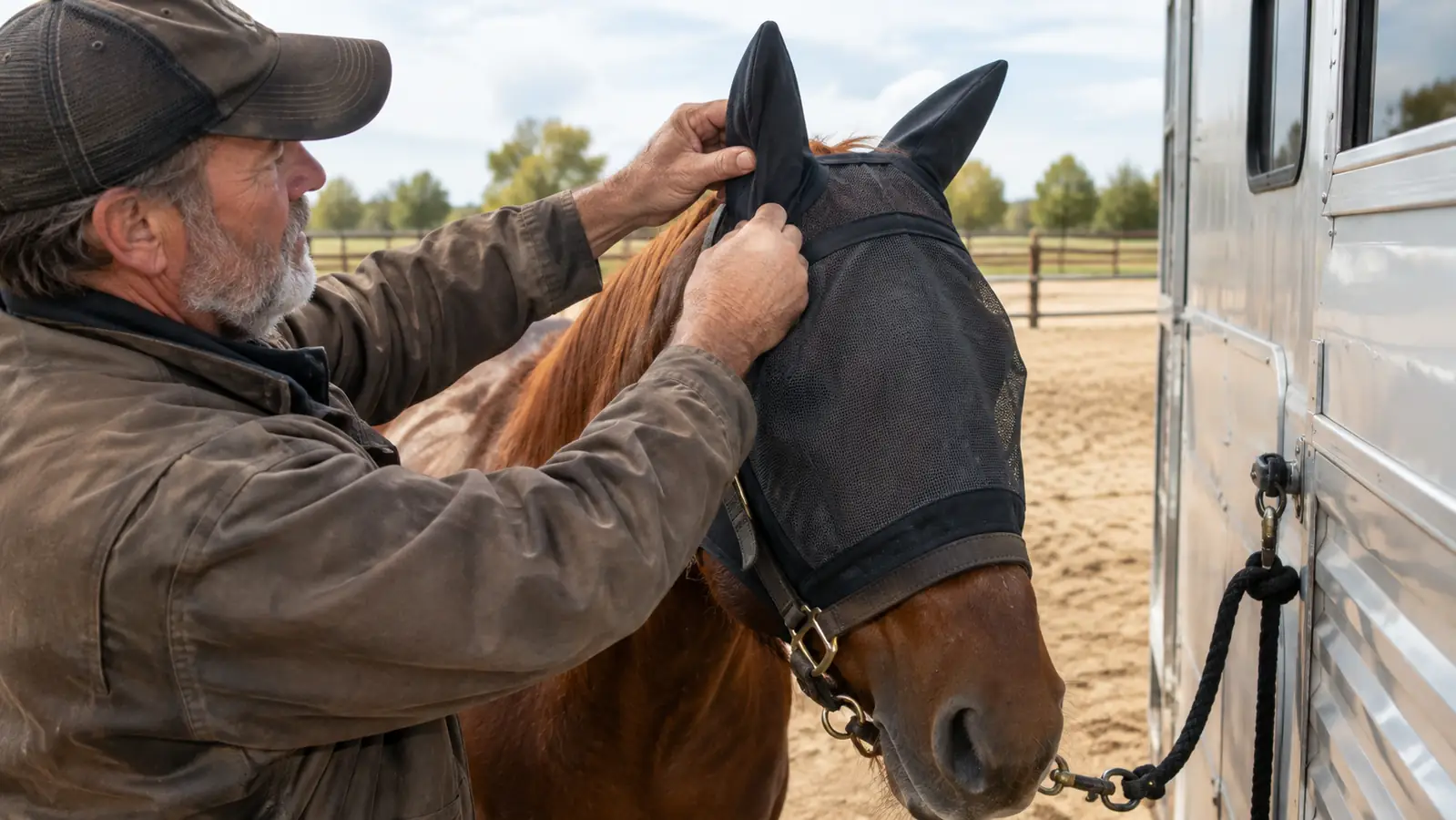
Where the Farnam SuperMask II Wins
I will give the Farnam its due. It wins on price, and it wins on availability. You can walk into almost any feed store in Texas and find a SuperMask II on the shelf, usually in two or three sizes, and you do not have to order it and wait a week. When you need a mask today because the flies are bad and your good mask is still drying on the line, that matters. It is also lighter, which some horses prefer. A horse that is not used to wearing a mask may tolerate the Farnam better at first because it does not feel like as much on their head. The mesh is thinner and the whole thing weighs maybe half what the Cashel does, so a sensitive horse does not get the same 'something is on my face' reaction.
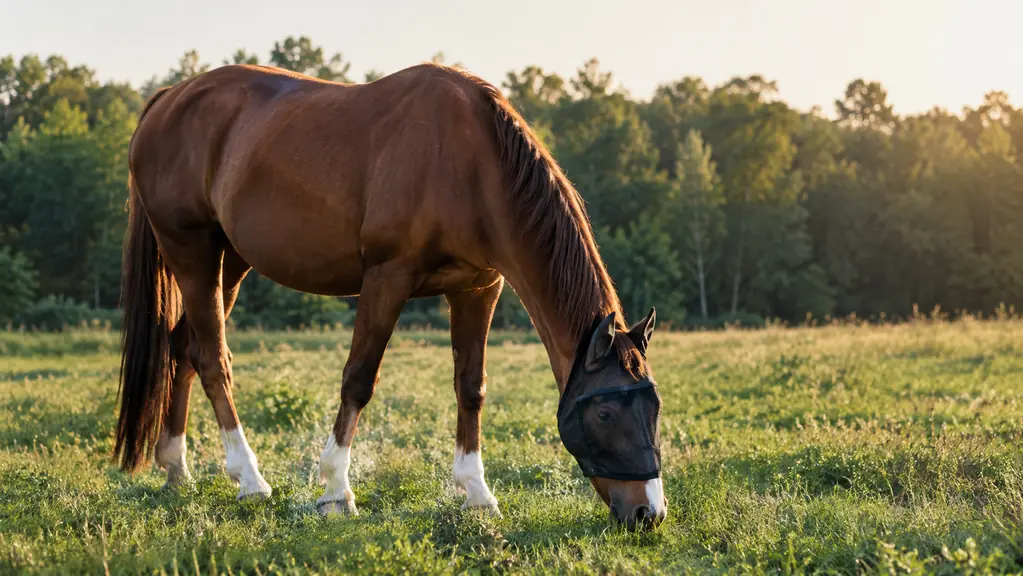
The Farnam also wins for a horse that just stands in a pasture and does not get handled much. The other two horses I keep at home wear Farnams most of the summer, and they do fine. If you are not hauling, not tying, not asking the mask to survive a rubbing horse, the lighter weight is fine. It keeps the flies off the eyes and the face, and it is cheap enough to replace when the sun fades it. For that job, it is a perfectly good mask. I would not call it a bad product. I would call it a lighter-duty product, and there is nothing wrong with that if your horse's hardest day is walking to the water trough and back.
One more thing in the Farnam's favor: the nose piece is softer and more flexible. On a horse that is sensitive about things touching his face, that softer material is easier to get used to. I have seen plenty of horses wear the Farnam without complaint, especially older horses that have worn one every summer for years. A friend of mine has a 22-year-old gelding that has worn a SuperMask every summer since he was a colt, and he will stand for anyone to buckle it. If your horse has never worn a fly mask and you are not sure how he will take to it, the Farnam is a gentler introduction than a heavier mask with built-in ears. Start there, let him get used to the idea, and move up if he needs more coverage.
The Farnam is also the easier mask to find in a hurry. I keep a spare SuperMask II in the tack compartment of my trailer for exactly that reason, the way I keep an extra halter and a spare tube of fly ointment. When I forgot the Cashel at home before a Friday night jackpot in Weatherford last July, I stopped at a feed store on the way and picked up a Farnam for the weekend. It did the job. It was not as snug as the Cashel, and I had to adjust it twice during the day, once after the first run when it had shifted to one side and again before the finals when it had worked its way up over his eye. But it kept the flies off Biscuit's eyes while we were there, and it got us through the weekend. That is worth something.
Who Should Buy Which
Buy the Cashel Crusader if your horse hauls to events, ties at the trailer, or rubs his face when he is bored. Buy it if you want ear coverage and a long nose that keeps the sun off the muzzle. Buy it if you are tired of replacing masks halfway through the summer. It costs more up front, but it lasts longer, and for a horse that lives on the road, that makes it the cheaper mask in the long run. I ran the numbers one night while I was waiting out a rain delay: two Farnams at feed store prices over one summer, plus the aggravation of adjusting a loose mask between runs, versus one Cashel that is still going into season two. The Cashel was the better deal before I even counted the aggravation.
Buy the Farnam SuperMask II if your horse lives in a pasture, does not get hauled, and does not rub. Buy it if you need a backup mask in a pinch or if you are on a tight budget. It is a fine mask for a horse that does not test it, and for a lot of people that is the whole job. But if you are loading up for a weekend of barrel racing and you want a mask that will still be on your horse's face when you get home, the Cashel Crusader is the one I would pack. I have done the load-up at 5:30 in the morning with the trailer already hitched and the coffee not finished, and I do not want to be second-guessing a mask that is going to slide sideways during the first run.
For my money, the Cashel Crusader is the mask that earns its place in the trailer. I have hauled Biscuit to jackpots in Stephenville, Weatherford, and a handful of smaller pens across Parker County, and the Cashel has been on his face for every one of those trips. It has survived the heat, the dust, the washing, and the rubbing. The Farnam SuperMask II is a good mask for what it is, but what it is not is a mask built for the road. If you only ever buy one fly mask this year and your horse leaves the property, buy the Cashel. If you need a spare to keep in the tack compartment, the Farnam is fine for that. But the mask that goes on Biscuit's face before the trailer door closes is the Cashel, every time.
Pack the mask that survives the weekend
The Cashel Crusader covers more, fits tighter, and holds up to real hauling. See today's price on Amazon and get one before the flies get bad.
Amazon Check Today's Price on Amazon →