
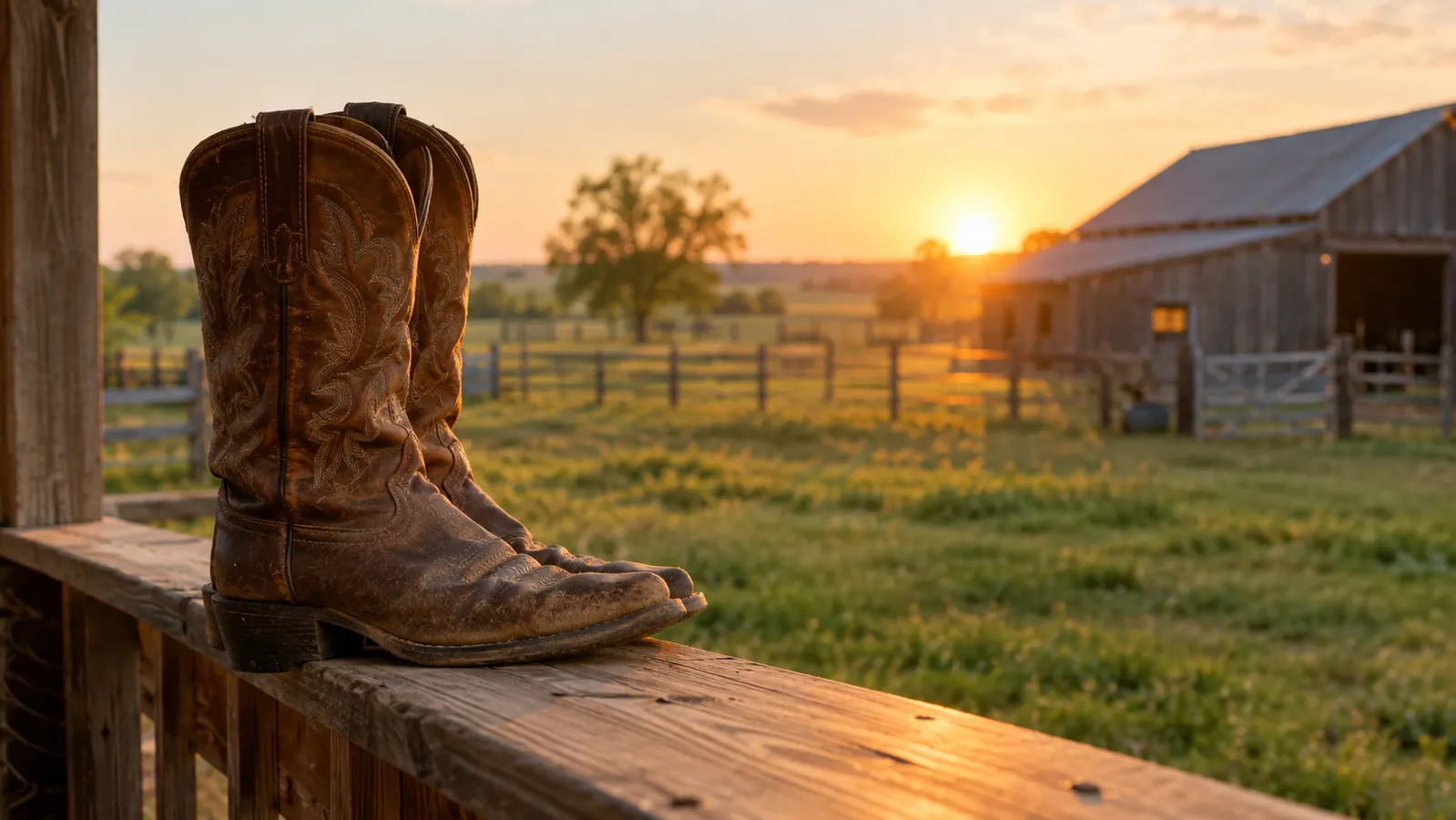
Somewhere around the third jackpot of the spring, I stopped checking my boots before I loaded the trailer. That is the real test. Not the first wear, not how they look in the store under bright lights. It is the morning you grab them by the heels, give them a once-over, and decide they will do for another full weekend without a second thought. I have gone through more pairs of boots than I can count, and most did not make it to a second season. These Ariat Sport Western boots have been living in that spot for the better part of a year now, and I figured that is long enough to tell you what they are really like.
I am Darla Kincaid. I spent twenty years as a 911 dispatcher, and I have spent longer than that around rodeos, first hauling horses with my daddy and now filming runs from the rail and running barrels on Biscuit, my fourteen-year-old sorrel gelding. I am not easy on boots. Between the alley, the chutes, the trailer, and feeding cows on the place, a pair of boots around here gets used like a tool, not a decoration. These have been through a full season of that, and here is what I can tell you.
The Quick Verdict
A comfortable, hard-wearing western boot that holds up to real rodeo weekends and everyday ranch work, with a break-in that is easier than most boots I have owned.
Amazon Check Today's Price →The boot I keep reaching for on rodeo weekends
After months of hauling, saddling, standing on the rail, and feeding cows, the Ariat Sport Western has held up better than boots that cost more. Check today's price on Amazon before you buy another pair that spends its first month punishing your feet.
Amazon Check Today's Price on Amazon →How I've Used It
I put these boots through a full rodeo season, which around here means something almost every other weekend from March through October. Local jackpots, a couple of bigger rodeos where I film from the rail, plus the everyday ranch stuff: feeding the cows, hauling hay, fixing fence, and the usual two-horse bumper-pull trailer behind a three-quarter-ton pickup. I wanted to know how the boot held up when it was the only pair I reached for, and that is exactly how I wore them.
On a rodeo weekend the boots go on Friday afternoon and come off Sunday night. That means the drive over, saddling and warming up Biscuit, my runs in the alley, then hours on my feet filming other folks' runs from the rail. Add the cooldown and the drive home and you are looking at twelve to fourteen hours a day in them. One Saturday in April it was closer to sixteen, because a storm delay pushed the last set of runs to nine at night and I had already been up since five. I also wore them doing chores around the place, so this was never a show boot test. It was a working boot test, the kind that tells you the truth.
I will say up front that I bought these myself and nobody asked me to write about them. I just got tired of buying boots that looked right in the store and fell apart by August, and I figured other folks in the stands and behind the chutes were tired of the same thing. If you are in that crowd, this review is for you.
Fit and Break-In: The First Two Weeks
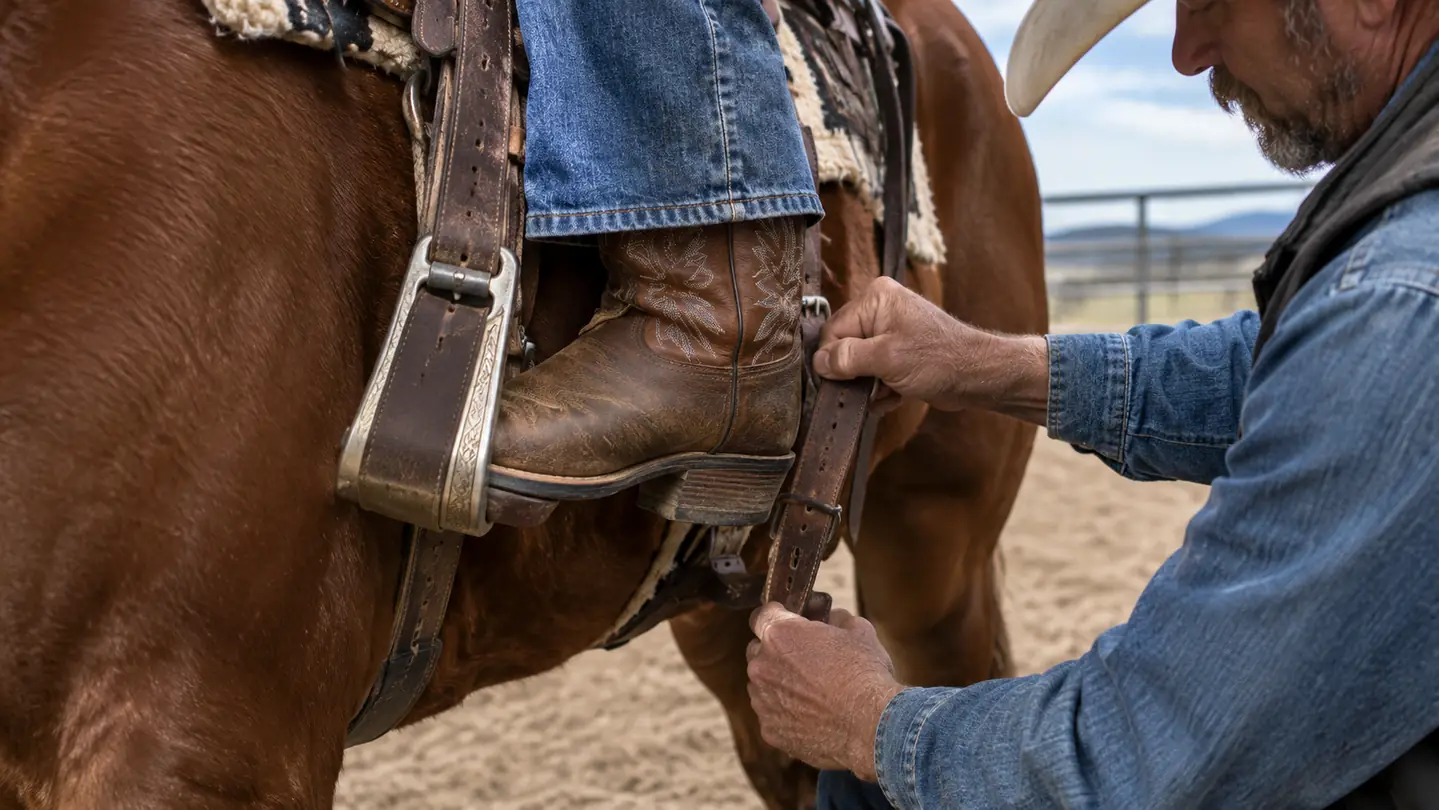
The wide square toe is the first thing you notice. If you have a wide foot, this shape gives your toes room to sit flat instead of being squeezed into a point. That matters when you are standing on concrete for hours at a time, and it matters more when you are in the stirrup. The toe is wide enough to feel roomy but not so wide that the boot looks like a work clog.
Break-in was easier than I expected, and I have broken in a lot of boots. The first two days the leather was stiff around the ankle, about what you expect from a new western boot. By the end of the first week they had loosened up. By the second week they felt like they had been mine for a year. I did not have to soak them, no wrestling matches with a boot jack, none of the misery I have put up with from other brands.
Sizing runs true to my usual boot size, which is not something I can say for every western boot on the market. I will add the usual advice: try them on with the socks you plan to wear, and if you are between sizes, go up. A boot that is tight across the instep never gets better. It just gets more expensive to replace.
One thing I did not expect: how well they work with a pair of jeans tucked in for the arena and then with chaps over them for the run. The shaft is tall enough that the boot stays put, but it is not so tall that it digs into the back of your knee when you are sitting in the stands. I have had boots that rubbed a raw spot behind my calf by Sunday. These have not once.
How They Ride: In the Stirrup and Behind the Chutes
The part I care about most is how a boot feels in the stirrup, because that is where you notice everything. The heel on these is low and well shaped. It does not hang up when you are getting in and out of the saddle, and it does not slide through the stirrup in a way that makes you feel loose. The shank is stiff enough to give you a solid platform without feeling like a board under your foot.
Ariat's ATS footbed is the part you cannot see but you can feel by hour six. There is real support under the arch and the heel, not just a flat slab of foam. I have had cheaper boots where my feet were screaming by the time the last barrel run was over. With these, my feet are tired at the end of a long day, but they are not angry, and that is a bigger difference than it sounds.
The outsole has been good on every surface I have put it on: wet concrete at the wash rack, the boards at the arena, gravel around the trailer, and the slick metal of the trailer ramp. I have not had a moment where I felt like I was skating. That is a bigger deal than folks who do not spend their weekends at rodeos might think.
The heel height is worth a word for folks used to ropers. These sit a little lower, which I like for getting on and off the horse a dozen times a day. You notice the difference when you are hauling saddles and coolers and talking to folks between runs. There is less to catch on a step or a trailer ramp, and that has saved me more than once.
What Holds Up and What Shows Wear After Months of Use
After months of this, the honest report is that they hold up well, with a few notes. The toe still has its shape. The stitching is intact everywhere, including along the shaft where I was sure it would catch on something. The soles are wearing normally, with the heel showing the most wear, which is exactly what I expect from years of walking on my heels in the alley and along the rail.
The leather scuffs. I have a mark on the left toe from the stirrup and a scrape on the right shaft from a trailer panel. That is normal for a working boot, and it has not affected the structure at all. If you are the kind of person who wants boots to stay pretty, these are not that. They are the kind that earn their scuffs and keep going.
What I would flag: the insoles have packed down some after months of hard use, so the cushioning is not as plush as it was on day one. That is normal, and a pair of good insoles will extend the life of the boot. The other note is that these are not waterproof. A wet morning in the pasture means damp socks by lunch. They dry out fine, but they are not a rain boot.
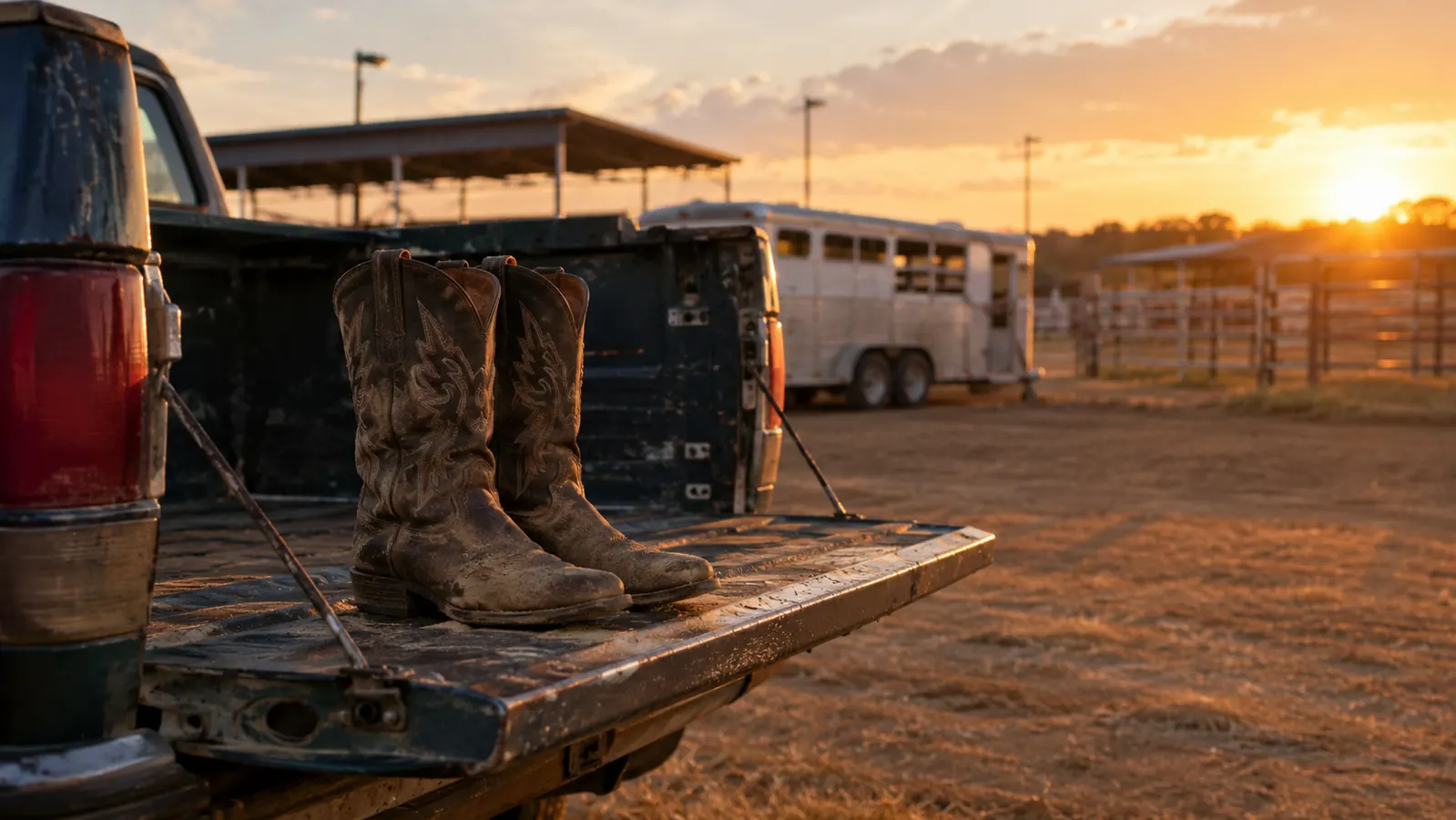
I also left them in the trailer overnight a few times, which is the kind of thing that ruins lesser boots. The leather got stiff in the morning and warmed back up after a few minutes of walking. No cracks, no separated seams, nothing that made me worry about the next weekend. That is the quiet test, and they passed it.
A Note on Care: What Keeps Them Going
I am not precious with my gear, but I do one thing that makes a difference: I brush the dirt off at the end of the weekend and give the leather a wipe with a damp rag before I set them by the door. That is it. No fancy conditioners every week, no shoe trees, none of the routine you see in the catalog photos.
Once or twice a season I put a light coat of conditioner on them, mostly on the shaft where the leather gets dry. If you do that, they will last you several seasons. If you do not, they will still last, they just will not look as good doing it. For a boot in this price range, that kind of lifespan is the real value.
Alternatives I Considered
Before I settled on these, I looked at the Rocky Ride Roper, which a lot of folks in this part of Texas swear by, and I tried a couple of cheaper pull-on boots that looked like a bargain and rode like one. The cheaper ones were stiff for weeks and the soles started separating before summer. The Rocky is a good boot, but the fit runs narrower through the toe, which did not work for my foot.
I kept coming back to the Ariat because it fit my foot out of the box and the quality held up under the kind of use I actually put boots through. I have also owned other Ariat models over the years, and the Sport Western is the one that hits the balance I want: comfortable enough for the stands, sturdy enough for the ranch, and easy to break in. That combination is harder to find than it should be. I have owned boots all over the range, from cheap to fancy, and these have outlasted both ends of it.
What I Liked
- Easy break-in, no soaking or boot jack required
- Comfortable for twelve to fourteen hour days on your feet
- Wide square toe gives wide feet room to sit flat
- Solid grip on wet concrete, arena boards, and gravel
- Stitching and structure holding up after months of heavy use
- Runs true to size
Where It Falls Short
- Insoles pack down after months of hard use
- Leather scuffs and shows wear, it is a working boot not a show boot
- Not waterproof, wet mornings soak through
- Lower heel is not ideal for ropers who need a taller underslung heel
Months in, these are the first boots I grab on a rodeo weekend, and the only pair I do not think about while I am wearing them.
Who This Is For
These are for the folks who live the same life I do. Barrel racers, ropers, and rodeo families who need one pair of boots to do everything: ride in them, walk the arena in them, stand on the rail in them, and wear them to supper afterward. If you are on your feet for hours at a time, the ATS footbed is worth a look on its own.
They are also a good fit if you have a wide foot and have been squeezing into pointed toes because that is what the store had. The wide square toe is not a style gimmick, it is a comfort feature. And if you are new to western boots and dreading the break-in, these are one of the easier pairs to start with.
Who Should Skip It
If you spend your days in deep mud and wet pens, you want a waterproof boot, because these are not it. A wet pasture morning will leave you with damp socks by lunch. If your job requires a steel toe, this is not a work boot, no matter how sturdy it feels. And if you rope hard and need a taller, more underslung heel to keep you locked in the stirrup, the lower sport heel on these is built for all-around use, not heavy roping. Ropers, especially, should pay attention to the heel, because that is the part that keeps you anchored, and the sport heel is not built for that job.
None of that makes these a bad boot. It just means they are not the right boot for every job. Buy for the job you actually do most weekends, and you will be happier than buying for the one you imagine doing someday.
If you are on the fence, this is the pair I would start with
After months of rodeo weekends and ranch days, I would buy these again without hesitating. Check today's price on Amazon and see if they fit your rotation the way they fit mine.
Amazon Check Today's Price on Amazon →